Do you need mental health treatment in Portland? Call us today at (866)262-0531 for more information.
At Crestview Recovery in Portland, Oregon, our clinicians specialize in compassionate, evidence-based depression treatment tailored to each person’s unique needs. Whether you are struggling with major depressive disorder, treatment-resistant depression, or depression co-occurring with a substance use disorder, our multidisciplinary team of psychiatrists, psychologists, and counselors is here to help you find lasting relief and reclaim your mental health.

Healing Begins Here

Signs and Symptoms of Depression
- Persistent feelings of sadness, emptiness, or hopelessness
- Loss of interest or pleasure in activities that were once enjoyable
- Significant changes in appetite or body weight
- Difficulty concentrating, making decisions, or remembering things
- Fatigue or loss of energy, even after rest
- Irritability, restlessness, or unexplained agitation
- Physical symptoms such as headaches, digestive problems, or body aches without a clear cause
- Thoughts of self-harm, suicide, or feeling like a burden to others
If you or someone you love is experiencing several of these symptoms, it is important to seek a professional evaluation. Depression is treatable, and the sooner help is sought, the better the outcome.
Signs That Medication May Need Adjustment
- Manic episodes, characterized by heightened energy, impulsivity, and racing thoughts, which may suggest a mood disorder requiring a different treatment approach
- Difficulty stabilizing mood swings or extreme emotional highs and lows
- Development of new phobias or compulsive behaviors
- Persistent insomnia despite lifestyle adjustments like improved diet and regular exercise
If you are experiencing any of these symptoms, our team at Crestview Recovery can help. We offer medication management, support for co-occurring conditions, and mental health treatment in Portland, Oregon, to help you navigate your path to lasting mental wellness.

What Is a Depression Treatment Program?
In some cases, individuals may benefit from advanced treatments such as transcranial magnetic stimulation (TMS) or electroconvulsive therapy (ECT), particularly when standard approaches have not produced results. Our team conducts a thorough assessment to identify the right combination of treatments for each individual.

Therapy Approaches in Our Depression Treatment Program
In individual therapy sessions for depression, clients work with a licensed therapist or counselor in a compassionate, judgment-free environment. Using evidence-based approaches such as CBT, DBT, or psychodynamic therapy, therapists help clients identify negative thought patterns, build self-awareness, improve self-esteem, and develop practical coping strategies for managing depressive symptoms.
Group therapy connects individuals facing similar challenges in a supportive setting led by a trained therapist. Participants gain insight from shared experiences, receive encouragement from peers, and practice interpersonal skills that combat the isolation so often associated with depression. Evidence-based group formats such as CBT and DBT are used to help clients develop lasting coping tools.
CBT is one of the most well-researched and effective therapies for depression. It works by helping clients identify and reshape the thought patterns and behaviors that interfere with their mental health. By examining the relationship between thoughts, feelings, and actions, clients learn to respond to challenges in healthier, more constructive ways.
DBT uses a combination of conversation, skills training, individual therapy, and self-monitoring to help clients develop healthy emotional responses. This approach is particularly effective for individuals who struggle with intense emotions, impulsivity, or difficulty regulating behavior alongside depression.
Our holistic therapy approach treats the whole person, mind, body, and spirit. In addition to evidence-based treatment, we incorporate mindfulness practices, meditation, yoga, nutrition support, and creative therapies. These complementary modalities reduce anxiety, promote relaxation, and help build the emotional resilience needed for lasting recovery.
Unresolved trauma is frequently an underlying driver of depression. Our trauma-informed therapists use evidence-based techniques, including Eye Movement Desensitization and Reprocessing (EMDR) and CBT to help clients process past trauma, understand its influence on their current mental health, and develop effective coping mechanisms. Treating trauma alongside depression is central to our integrated approach.
Trauma-Informed Care (TIC)
The relationship between trauma and depression is complex. A trauma-informed therapist helps clients recognize when past experiences are driving current emotional responses and provides a safe, supportive space to work through those connections. This approach is woven throughout our depression treatment program at Crestview Recovery.
Addressing Treatment-Resistant Depression in Portland
At Crestview Recovery, we take a thorough, multidisciplinary approach to treatment-resistant depression. This may include a comprehensive diagnostic evaluation to identify co-occurring conditions, medication adjustments or alternative prescriptions, advanced therapies, holistic interventions, and lifestyle modification support. If you or a loved one has not found relief through previous depression treatment, we encourage you to reach out; there are options.
Causes of Co-Occurring Disorders with Depression
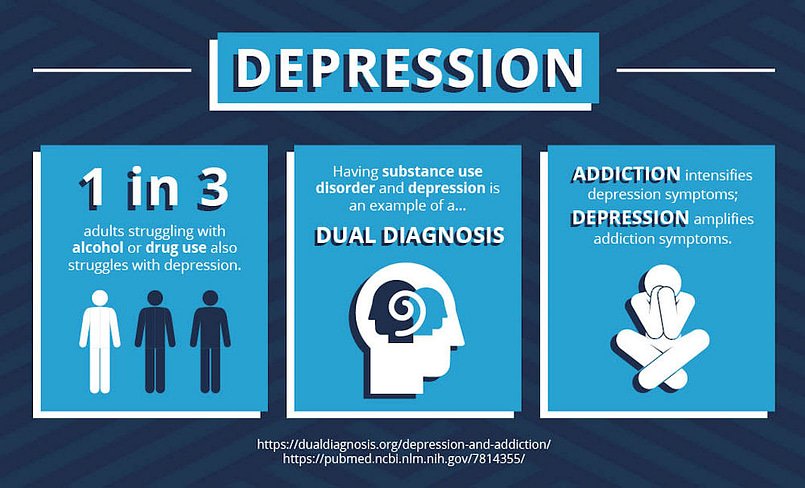
When individuals are overwhelmed by depression, they may turn to alcohol or drugs to self-medicate, temporarily dulling symptoms but ultimately deepening the cycle of dependency and mental health decline. At Crestview Recovery, our comprehensive dual diagnosis approach addresses these complex, overlapping causes with tailored treatment plans designed to produce genuine, lasting healing.
Dual Diagnosis and Depression
Our experienced clinical team recognizes that depression commonly co-occurs with anxiety disorders, bipolar disorder, PTSD, and addiction. Each of these combinations requires a tailored treatment plan that addresses both conditions simultaneously, because treating only one while leaving the other unaddressed dramatically reduces the likelihood of lasting recovery. Through evidence-based therapies, medication management, and a structured, supportive environment, we help clients navigate the full complexity of their mental health and emerge with real tools for sustainable wellness.
Types of Mood Disorders We Treat
Major depressive disorder (MDD) is characterized by persistent low mood, loss of interest, fatigue, and cognitive impairment that significantly interfere with daily life. It is one of the most common mental health diagnoses in the United States and responds well to a combination of therapy and, in many cases, medication.
While depression and bipolar disorder are sometimes used interchangeably, they are distinct conditions requiring different treatment approaches. People with bipolar disorder experience depressive episodes alongside periods of mania, elevated mood, increased energy, and reduced need for sleep. Our Portland mental health team provides specialized bipolar disorder treatment tailored to the full spectrum of this condition.
Cyclothymia is a mood disorder involving fluctuating episodes of mild depression and hypomania that are less severe than those seen in bipolar disorder. While the mood shifts are not as extreme, cyclothymia can still significantly disrupt daily functioning and relationships without proper treatment.
Hypomania is a mood state involving elevated energy, impulsivity, racing thoughts, and inflated self-esteem that is less severe than full mania. While hypomania may temporarily feel productive, it can progress to more serious mood episodes and cause relational and occupational disruption if left unaddressed.
DMDD is characterized by severe, recurrent temper outbursts that are disproportionate to the situation, along with chronic irritability and anger. Most commonly diagnosed in children and adolescents, DMDD can significantly impair functioning at home, school, and in social environments.
Formerly known as dysthymia, PDD is a chronic form of depression marked by persistent sadness, hopelessness, and low self-esteem that lasts for at least two years in adults (one year in children). Although the symptoms are less acute than MDD, PDD can make it profoundly difficult to experience joy or satisfaction in everyday life.

Depression Treatment FAQ
Sadness is a normal emotional response to difficult life events and typically resolves as circumstances change. Clinical depression is a medical condition involving persistent low mood, loss of interest, and physical symptoms that last for two weeks or more and significantly impair daily functioning, regardless of external circumstances. At Crestview Recovery, our psychiatrists and clinicians conduct a thorough evaluation to distinguish between situational distress and a diagnosable depressive disorder.
Yes, in fact, treating both conditions together through a dual diagnosis program produces significantly better outcomes than treating either one alone. At Crestview Recovery in Portland, Oregon, our integrated approach addresses depression and substance use disorder simultaneously, using a combination of therapy, medication management, and holistic support. Leaving either condition untreated dramatically increases the risk of relapse and persistent mental health decline.
Our depression treatment program draws on a comprehensive range of evidence-based therapies, including Cognitive-Behavioral Therapy (CBT), Dialectical Behavior Therapy (DBT), trauma therapy, individual therapy, group therapy, family therapy, and holistic approaches such as mindfulness, yoga, and nutrition support. Each client’s treatment plan is individualized based on their specific history and needs.
The duration of depression treatment varies depending on the severity of the condition, the presence of co-occurring disorders, and the level of care required. Some individuals benefit significantly from a focused 30 to 60-day program, while others, particularly those with dual diagnosis or treatment-resistant depression, benefit from longer, more intensive care followed by a structured step-down through IOP and outpatient treatment. At Crestview Recovery, we work with each client to build a treatment timeline that is realistic, clinically appropriate, and designed for lasting results.
Most insurance plans cover depression treatment, as the Affordable Care Act requires most policies to include mental health care as an essential health benefit. Coverage specifics, including co-pays, deductibles, and approved levels of care, vary by plan. Crestview Recovery is in-network with many major insurance providers, and our admissions team can verify your benefits and explain any out-of-pocket costs before you commit to a program.
Begin Your Journey at Crestview Recovery
Contact us today or reach out online to learn more about our depression treatment programs. We are available 24 hours a day.