
Healing Begins Here
What Are Benzodiazepines?
Some of the most common benzodiazepines include:
- Xanax (alprazolam)
- Valium (diazepam)
- Klonopin (clonazepam)
- Ativan (lorazepam)
Signs of Benzo Addiction
- Taking benzodiazepines in higher doses or more frequently than prescribed
- Continuing to use despite negative consequences
- Experiencing anxiety or panic when unable to access the medication
- Seeking prescriptions from multiple doctors
- Using benzos to cope with everyday stress or emotions

Benzo Withdrawal Symptoms
- Increased tension and anxiety
- Sleep disturbances and insomnia
- Confusion and cognitive difficulty
- Tremors and sweating
- Nausea and weight loss
- Muscular pain
- Hallucinations
- Seizures — a potentially serious complication requiring medical supervision
- Depression
Because benzo withdrawal can be dangerous — including a risk of life-threatening seizures — it is critical to detox under medical supervision. Do not attempt to taper off benzos without professional help.
Our Benzo Treatment Process
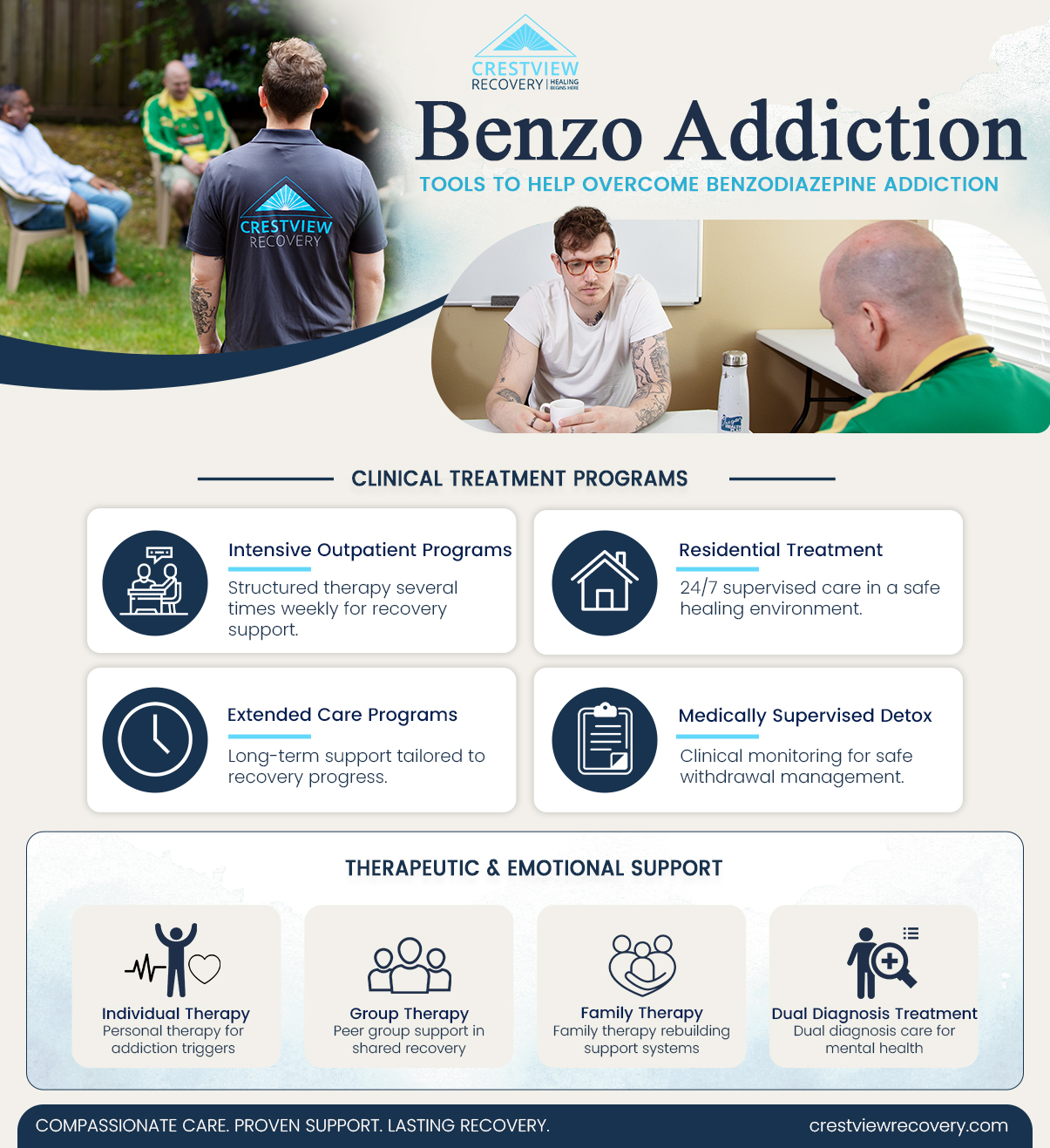
The detoxification process is the first step in addiction rehab, and it must be done under medical supervision. Our certified medical professionals will help you through the detox process using a safe tapering protocol and, where appropriate, medications to ease symptoms and prevent complications.
Once detox is complete, you will begin individual therapy to explore the root causes of your addiction and develop strategies for coping with triggers in the future. Therapy modalities used at Crestview for benzo addiction include CBT, DBT, trauma-informed care, and holistic approaches.
Group counseling and family therapy are also key components of the treatment process. Group sessions provide peer support and accountability, while family therapy helps repair relationships that may have been affected by addiction.

Extended Care Options
Why Choose Crestview Recovery?
Don’t let benzo withdrawal prevent you from beating addiction. Call Crestview Recovery today.

FAQ Section — Benzo Addiction Treatment
Benzodiazepine addiction treatment is a structured process that helps individuals safely stop using benzos and build a sustainable, drug-free life. At Crestview Recovery, treatment begins with medically supervised detox to manage withdrawal symptoms safely, followed by individual therapy, group counseling, and dual diagnosis support if co-occurring mental health conditions are present. Our team creates a personalized plan based on each client’s history of use and overall health.
The length of benzo addiction treatment varies depending on the severity of dependence and each person’s individual needs. Detox alone can take one to two weeks, and ongoing treatment through residential or outpatient programs typically runs 30 to 90 days or longer. At Crestview Recovery, we offer extended care options for clients who benefit from additional time in a structured setting.
Signs that you may need benzodiazepine addiction treatment include taking benzodiazepines more frequently or in higher doses than prescribed, experiencing anxiety or panic when you cannot access them, continuing to use despite negative consequences, and showing withdrawal symptoms such as tremors, insomnia, or irritability when stopping. If benzos are affecting your relationships, work, or health, Crestview Recovery’s team in Portland can help.
Yes — benzo withdrawal can be medically dangerous and in severe cases life-threatening. Unlike opioid withdrawal, benzodiazepine withdrawal can cause seizures and other serious complications. This is why it is critical to detox under medical supervision. Certified medical professionals monitor clients throughout the detox process to ensure their safety and comfort.
During benzo detox, our medical team monitors your vital signs and withdrawal symptoms around the clock. A tapering protocol is typically used — gradually reducing your dose rather than stopping abruptly — to minimize the risk of severe withdrawal. Medications may be used to ease discomfort and prevent complications. Once detox is complete, clients transition into individual therapy and the broader treatment program.
At Crestview Recovery, benzo addiction treatment incorporates cognitive behavioral therapy (CBT), dialectical behavior therapy (DBT), trauma-informed therapy, group counseling, family therapy, and holistic approaches such as mindfulness and meditation. The specific combination of therapies is tailored to each client’s individual needs and history.
Yes. Co-occurring mental health conditions, such as anxiety, depression, or PTSD, are very common among people who develop benzo addiction — often because benzos were originally prescribed to manage those conditions. Crestview Recovery offers dual diagnosis treatment that addresses both the substance use disorder and any underlying mental health issues simultaneously, which leads to better long-term outcomes than treating them separately.
The duration of benzo withdrawal varies depending on which benzodiazepine was used, how long it was taken, and the dosage. Short-acting benzos like Xanax may produce withdrawal symptoms within hours, while longer-acting benzos like Valium may take several days. Acute withdrawal can last one to four weeks, and some individuals experience protracted withdrawal — including anxiety, insomnia, and cognitive difficulty — that persists for months. Medical support can help manage symptoms throughout.
Most major insurance plans cover benzodiazepine addiction treatment, including detox, residential care, and outpatient programs, as part of mental health and substance use disorder benefits. Crestview Recovery accepts most insurance plans and assists with insurance verification to help you understand your specific coverage before you begin treatment.
The appropriate level of care depends on the severity of your dependence, your home environment, and whether any co-occurring conditions are present. Options at Crestview Recovery include residential treatment, partial hospitalization(PHP), intensive outpatient (IOP), and standard outpatient. Our intake team will conduct a thorough assessment and recommend the level of care that best fits your needs.
Tapering off benzos without medical supervision is not recommended and can be dangerous. Benzo withdrawal carries a risk of serious complications, including seizures, and many people find it extremely difficult to manage the process on their own due to intense cravings and rebound anxiety. The medical team manages a safe, supervised tapering process so that withdrawal is handled as comfortably and safely as possible.