
Healing Begins Here
Heroin Addiction Treatment Programs at Crestview Recovery
For those who need a structured, immersive environment, our residential program offers around-the-clock clinical support while clients focus entirely on healing. Our 90-day residential option is especially effective for individuals with severe dependence or a history of relapse, providing the extended time needed to build a genuine foundation for sobriety.
PHP for heroin addiction offers intensive, structured treatment during the day while allowing clients to return home or to sober living in the evenings. It’s an effective step-down from residential care or an entry point for those who need more support than traditional outpatient programs provide.
Our IOP allows clients to continue working toward recovery while beginning to rebuild their everyday lives. With multiple sessions per week covering therapy, relapse prevention, and life skills, IOP for addiction provides meaningful structure without requiring full-time residency.
Crestview offers medication-assisted treatment as part of a comprehensive heroin recovery plan. FDA-approved medications can significantly reduce cravings and withdrawal symptoms, improving the likelihood of long-term success when combined with behavioral therapy.
Many people struggling with heroin addiction also live with underlying mental health conditions such as depression, anxiety, or PTSD. Our dual diagnosis program treats both simultaneously, addressing the root causes of addiction rather than just its symptoms.
Individual therapy, group therapy, CBT, DBT, trauma therapy, and 12-step programming are all woven into our heroin treatment programs. These approaches equip clients with the emotional tools, coping strategies, and peer support needed to maintain sobriety long after leaving our facility.
How Does Heroin Addiction Develop?
Heroin is processed from morphine, a naturally occurring substance derived from poppy plants, and can appear as a white or brown powder or a dark, sticky tar. It can be injected, snorted, or smoked. Regardless of how it’s used, heroin is one of the most addictive substances known, and dependence can develop rapidly, often before a person realizes how serious the problem has become.
Signs Of Heroin Use
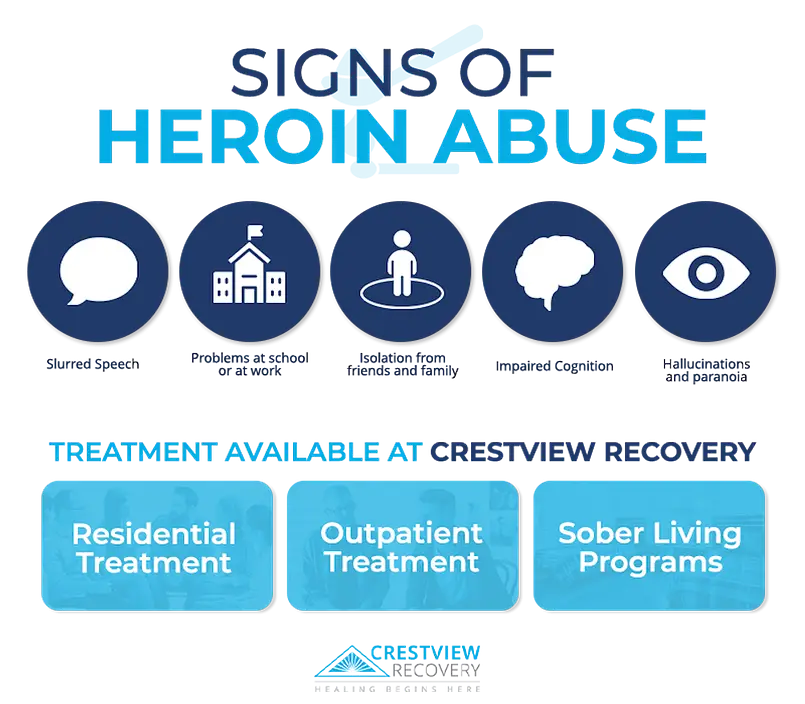
The signs of heroin addiction include the following:
- Slurred speech
- Poor balance
- Exhaustion
- Cognitive impairment
- Absence of responsibility and accountability
- Inability to maintain employment
- Isolation from friends and family members
- Erratic or hostile behavior during withdrawal
- Theft
- Prostitution
- Infections
Addicts may have shortness of breath, weight loss, fatigue, needle marks, and constricted, or very small, pupils. As dependence grows, individuals often require more of the drug just to feel normal, making treatment for heroin addiction essential.
Signs of Heroin Withdrawal

Begin Heroin Addiction Treatment in Portland Today
Call us today or reach out online to speak with a member of our compassionate admissions team. We serve clients from Portland and throughout Oregon, and we’re ready to help when you are.
FAQ about Heroin Rehab
Yes. Crestview Recovery accepts most major insurance plans, including Aetna, Blue Cross Blue Shield, Cigna, Kaiser Permanente, Providence, Moda, and many others. You can verify your coverage quickly through their online insurance verification tool.
Absolutely. Crestview offers dual diagnosis treatment for clients dealing with both addiction and co-occurring mental health conditions such as depression, anxiety, PTSD, or ADHD. Addressing both issues simultaneously gives clients a stronger foundation for lasting recovery.
The length of treatment varies depending on the severity of the addiction and individual needs. Crestview Recovery offers programs ranging from short-term intensive options like PHP and IOP to a full 90-day residential program. Research consistently shows that longer treatment durations lead to better outcomes, and many clients benefit from stepping through multiple levels of care, from residential treatment into outpatient support and sober living, before transitioning to independent recovery.
Heroin is considered one of the most addictive substances in the world because of the way it hijacks the brain’s reward system. It floods the brain with dopamine, producing an intense rush of pleasure that normal activities simply cannot replicate. With repeated use, the brain stops producing its own feel-good chemicals naturally, leaving users dependent on the drug just to feel baseline normal. Tolerance also builds quickly, meaning people need larger and larger amounts to get the same effect; a cycle that rapidly becomes very difficult to break without professional help.
Quitting heroin cold turkey is not only extremely difficult but can also be dangerous. The safest path to stopping is through a supervised medical detox, where withdrawal symptoms are carefully managed by medical professionals. Medications such as Suboxone can ease withdrawal and cravings during this phase, which is why Suboxone addiction treatment is often part of early heroin recovery. After detox, ongoing treatment, such as residential rehab, medication-assisted treatment, and therapy, addresses the deeper behavioral and emotional patterns that fuel addiction. Crestview Recovery guides clients through every stage of this process, from that first difficult step through long-term aftercare support.