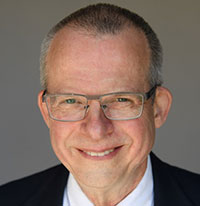
Dr. Dave Cundiff came to addiction medicine by an unusual route: through public health. Before treating addiction one patient at a time, he spent decades studying what harms people’s health at scale, and the answers kept coming back to substances: tobacco, alcohol, and then opioids. That background shapes how he practices today. He weighs the medical evidence carefully, stays candid about what it can and can’t tell us, and builds treatment around what actually helps people get their lives back.
“I came to addiction medicine with a lot of training in the evaluation of medical evidence. That’s allowed me to learn addiction from a different point of view — someone who looks at the science carefully and tries to figure out what’s best for patients.”
Education & Training
- MD — Perelman School of Medicine, University of Pennsylvania
- MPH — Johns Hopkins Bloomberg School of Public Health
- Residency — Public Health & General Preventive Medicine
Board Certifications
- Addiction Medicine — American Board of Preventive Medicine
- Public Health & General Preventive Medicine — American Board of Preventive Medicine
Professional Leadership
- Member, Council on Science and Public Health — American Medical Association
- Fellow, American Society of Addiction Medicine (FASAM)
- Mentor, Providers Clinical Support System (PCSS) — the federally funded national program supporting clinicians in treating opioid use disorder with buprenorphine
- Former State Medicaid Medical Director, Washington State
- Former Medical Director, Bayview Recovery, Tacoma, WA
Selected Publication
- Grande LA, Cundiff D, et al. “Evidence on Buprenorphine Dose Limits: A Review.” Journal of Addiction Medicine, 2023. https://pmc.ncbi.nlm.nih.gov/articles/PMC10547105/
His Approach to Treatment
Dr. Cundiff will tell you the medical care matters and the psychiatric care matters, and that the most important ingredient is something no study can fully measure.
“Recovery is a team sport. It’s not a solo sport. None of us recovers from addiction in our closets. We recover from addiction around other people who care about our recovery.”
That belief runs through how Crestview’s medical team works: residential technicians connect with clients while keeping them safe, counselors connect while building insight, and the medical and psychiatric team connects while watching for the clues —physical, psychiatric, pharmacological—that determine whether treatment holds.
On Safety, First
Not everyone arrives at Crestview through detox, and not everyone needs to, but some do, and getting that judgment right is where medical leadership earns its place.
“Trying to quit really heavy use of alcohol on your own can be really dangerous. And heavy doses of benzodiazepines can be even more dangerous. If we’re not giving safe care, nothing else much matters.”
A physician evaluates whether a direct residential admission is safe before someone arrives — not after.
On Medication
“You notice I didn’t say medication-assisted. The medications for addiction treatment — they help more people get to meaningful sobriety, faster and safer.”
He is direct about the stigma:
“When someone is a great partner, a great parent, a great worker, a great student, a great citizen — and they don’t have to lie to anybody to do it — that’s sobriety in my book.”
Why He Practices at Crestview
“What’s the right thing to do for this patient?”
That question, he says, is the whole job.