Lexapro, known generically as escitalopram, is a widely prescribed Selective Serotonin Reuptake Inhibitor (SSRI) used to treat anxiety and depression. Women’s bodies process it differently because of hormones and metabolism. Women taking Lexapro may encounter a specific range of side effects, varying from mild physical discomforts like nausea to more complex issues involving reproductive health. Understanding these side effects helps women make smarter decisions about their mental health treatment.
If you’re dealing with anxiety or depression, knowing how your body responds to medication matters. Hormonal fluctuations, metabolic differences, and life stages such as pregnancy or menopause all influence how the body processes escitalopram. At Crestview Recovery, we know medication is only part of the picture. Our programs support women through every aspect of mental health treatment. If you are struggling with side effects or need a more integrated approach to care, our outpatient mental health programs provide the professional guidance necessary for healing.
What Is Lexapro?
Lexapro is a prescription medication that belongs to a class of drugs called Selective Serotonin Reuptake Inhibitors (SSRIs). It works by stopping the brain from reabsorbing serotonin, keeping more of this mood-regulating chemical available. By keeping serotonin levels steady, Lexapro helps balance brain chemistry, which is why doctors prescribe it for anxiety and depression.
Healthcare providers commonly prescribe Lexapro to treat Generalized Anxiety Disorder (GAD) and Major Depressive Disorder (MDD). Since it changes brain chemistry, your body needs time to adjust, and that can cause side effects. Knowing how the drug works helps you prepare for what might happen.
What Are the Common Lexapro Side Effects in Women?
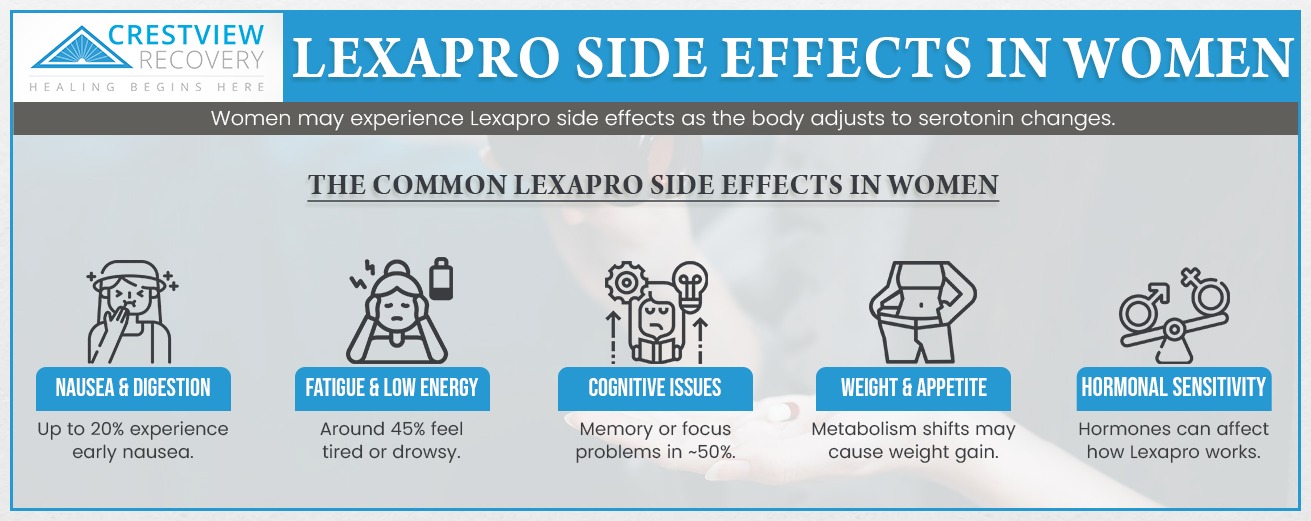
Women taking Lexapro frequently report physical side effects during the initial phase of treatment. These symptoms usually show up in the first week while your body adjusts to higher serotonin levels. You might also notice excessive sweating, dry mouth, or dizziness; hormonal changes can make these worse by affecting how your body processes the drug.
Women may also experience cognitive and emotional shifts. Most of these side effects fade after a few weeks, but if they don’t, talk to your doctor about adjusting your dose.
- Nausea: A feeling of sickness that affects up to 20% of women, usually improving within two weeks
- Fatigue: Reported by 45% of women, often resulting in daytime drowsiness or lack of energy
- Cognitive Changes: Includes memory issues or difficulty concentrating, affecting about half of female patients
Lexapro and Hormonal Changes in Women

Lexapro and female hormones don’t always play well together. Since serotonin is tied to estrogen and progesterone, hormone shifts can change how well the medication works.
Life stages involving major hormonal shifts, such as menopause and perimenopause, can further influence Lexapro’s effects. As estrogen drops during these times, your body might react differently to serotonin. If you’re on birth control pills, they can change how your liver processes Lexapro, so a different dose may be required.
Weight Changes and Lexapro
Weight changes are common with Lexapro. This happens because serotonin affects appetite and how your body burns calories. You might crave more carbs or feel hungrier, which can lead to slow weight gain over a few months.
To manage weight changes, stay on top of diet and exercise. Some women may experience initial weight loss due to nausea, followed by a gain once the appetite returns. Talk to your doctor about these changes, as they can help figure out if it’s the medication or something else.
- Metabolic Shifts: The medication can alter how the body processes energy, leading to gradual weight gain
- Appetite Changes: Increased cravings for sweets or carbohydrates are common
- Lifestyle Management: Regular physical activity and portion control are essential for managing this side effect
Serious Side Effects to Watch for
Most side effects are mild, but a few are serious and require immediate medical help. Serotonin syndrome is a rare but dangerous condition that happens when too much serotonin builds up in the system. Symptoms include agitation, hallucinations, rapid heartbeat, fever, muscle stiffness, and confusion. The risk goes up if you take Lexapro with other drugs that affect serotonin.
Other serious risks include severe allergic reactions and a higher chance of bleeding. If you take blood thinners or NSAIDs like ibuprofen with Lexapro, you’re more likely to bleed abnormally. The FDA also has a black box warning: young adults under 25 face a higher risk of suicidal thoughts and behaviors.
| Symptom Category | Warning Signs to Watch For |
|---|---|
| Serotonin Syndrome | High fever, rapid heart rate, muscle rigidity, confusion |
| Allergic Reaction | Skin rash, hives, swelling of the face or throat, difficulty breathing |
| Psychiatric | New or worsening suicidal thoughts, panic attacks, extreme agitation |
| Physical | Abnormal bleeding, seizures, severe weakness (low sodium) |
How Long Do Lexapro Side Effects Last?
How long side effects last depends on the person. Mild symptoms like nausea, dizziness, and headaches usually go away within 1 to 4 weeks as your body adjusts. Sleep problems might take longer, sometimes lasting 2 to 6 weeks.
Some side effects stick around long-term. Weight changes often do not resolve after the adjustment period and may continue for the duration of treatment.
Managing Lexapro Side Effects
There are a few simple ways to ease Lexapro side effects. Taking it with food can cut down on nausea. If you’re drowsy, try taking it at night. If you can’t sleep, morning might work better. Drinking plenty of water and sticking to a regular sleep schedule also helps.
Talking openly with your doctor is the best way to manage side effects. Tracking your symptoms helps your doctor decide if you need a different dose or medication.
- Timing Adjustments: Switch to morning or evening dosing to manage sleep issues
- Dietary Habits: Take with food to prevent nausea; monitor intake to manage weight
- Hydration: Drink plenty of water to combat dry mouth and dizziness
When to Talk to Your Doctor About Side Effects
Knowing when to call your doctor can keep you safe. If side effects mess with your daily life, talk to your doctor. If nausea or headaches last more than four weeks, get medical help.
Severe reactions require emergency medical care. Chest pain, trouble breathing, seizures, or signs of serotonin syndrome? Call 911 right away. If you experience worsening anxiety or depression, or have thoughts of self-harm, seek help immediately.
Lexapro Withdrawal and Discontinuation
Stopping Lexapro suddenly can cause discontinuation syndrome. Women might be more prone to withdrawal symptoms because hormones affect how serotonin works. Symptoms include “brain zaps,” dizziness, irritability, nausea, and flu-like aches. These symptoms can start within a few days of missing a dose.
To stop Lexapro safely, a gradual taper is recommended. Your doctor will create a schedule to slowly lower your dose, giving your brain time to adjust. Women with co-occurring substance use issues may benefit from specialized support found in dual diagnosis treatment programs.
Mental Health Treatment Beyond Medication
Medication fixes chemical imbalances, but it doesn’t address the deeper psychological causes of mental health issues. Therapy gives you tools to process emotions and build coping skills. CBT and DBT are proven therapies that help women manage symptoms better.
For women, individual therapy offers a safe space to explore personal challenges, trauma, and life transitions that contribute to mental health struggles. Integrating these therapies ensures a more sustainable recovery.
How Crestview Recovery Supports Women’s Mental Health

Crestview Recovery provides a compassionate, gender-responsive approach to mental health treatment. We understand that women face unique challenges regarding medication side effects, hormonal health, and societal pressures. Our programs integrate medical management with therapeutic support.
We offer various levels of care to suit different lifestyles. Our Partial Hospitalization Program (PHP) provides intensive daily support, while our Telehealth IOP offers flexibility for women balancing work and family.
If you are struggling with the side effects of Lexapro or feel that medication alone is not fully addressing your mental health concerns, you do not have to navigate this journey alone. Crestview Recovery’s mental health programs provide comprehensive treatment that combines medication management support with evidence-based therapies, helping women address the root causes of their mental health challenges. Contact Crestview Recovery today to learn more about our personalized treatment options and take the first step toward a healthier, more balanced life.
Frequently Asked Questions About Lexapro Side Effects in Women
Lexapro typically begins to reduce symptoms within 2 to 4 weeks of starting treatment. Full therapeutic benefits are often not felt until 6 to 8 weeks. Women may experience variations due to hormonal fluctuations affecting metabolism.
Most common physical side effects typically diminish within 4 to 6 weeks. However, weight changes are more likely to persist throughout treatment.
It is strongly recommended to avoid alcohol while taking Lexapro. Alcohol can counteract the medication’s benefits and increase side effects like drowsiness and dizziness.
Take it as soon as you remember, unless it is close to time for your next dose. Never double up on doses, as this increases the risk of side effects like serotonin syndrome
Yes, women may experience different or more intense side effects due to hormonal and metabolic differences. Women are statistically more likely to report fatigue and weight gain.
Never stop taking Lexapro abruptly without consulting your doctor. A healthcare provider can help you gradually taper off safely or switch to an alternative.
https://www.nimh.nih.gov/health/topics/mental-health-medications
https://medlineplus.gov/druginfo/meds/a603005.html
https://www.ncbi.nlm.nih.gov/pmc/articles/PMC3108697/
https://www.fda.gov/drugs/postmarket-drug-safety-information-patients-and-providers/escitalopram-marketed-lexapro-information
https://www.ncbi.nlm.nih.gov/books/NBK557734/
https://www.womenshealth.gov/mental-health/mental-health-conditions/depression