
Healing Begins Here
WHAT IS AN OUTPATIENT DRUG REHAB CENTER?
This type of rehab program allows individuals to maintain their daily routines and responsibilities while receiving the necessary treatment and support. In addition to therapy sessions, outpatient rehab may include various components such as individual counseling, group therapy, family therapy, psychoeducation, skill-building workshops, and support groups. The specific treatment modalities and services offered can vary depending on the outpatient program and the individual’s needs. The goal of outpatient drug or alcohol rehab is to provide effective treatment and support while allowing individuals to integrate their recovery journey into their everyday lives.


WHO NEEDS AN OUTPATIENT DRUG REHAB CENTER?
The criteria that medical professionals use to diagnose the severity of your addiction are as follows:
- Withdrawal symptoms occur when substance use is discontinued and only resolve upon resuming substance use
- Experiencing cravings for the drug or alcohol
- Developing tolerance, requiring increasing amounts of the substance for desired effects
- Persisting substance use despite worsening physical or mental disorders
- Devoting significant time to acquiring, using, or recovering from substance use
- Engaging in substance use despite the potential danger
- Struggling to reduce drug or alcohol consumption despite attempts
- Sacrificing recreational, professional, and social activities due to substance use
- Exceeding intended drug or alcohol use quantities or duration
- Continuing substance use despite relationship problems
- Failing to fulfill responsibilities at home, work, or school due to substance use
INPATIENT VS. OUTPATIENT DRUG REHAB CENTER
At Crestview Recovery, our outpatient drug rehab center in Portland, Oregon, provides greater flexibility with varying degrees of addiction treatment programs. We create an individualized plan based on your needs to ensure we meet you where you are in recovery. For instance, while a standard outpatient program may work for some, others may need an intensive outpatient program or a partial hospitalization program.

Outpatient Programs vs Intensive Outpatient Programs
IOPs are suitable for individuals with moderate to severe symptoms or those in need of more structure and support. Both outpatient and IOP programs offer treatment services, such as therapy and medication management, for substance use and mental health disorders. The duration of treatment varies, with outpatient programs lasting several months and IOPs typically ranging from several weeks to a few months. The choice between the two depends on the individual’s clinical needs and the level of support and intensity required. You can discuss treatment options with our staff and clinical team to determine what will be most effective for you.
WHAT TO EXPECT IN OUTPATIENT TREATMENT
Various evidence-based treatments are available, including therapy for drug or alcohol addiction and mental health services for co-occurring disorders. Therapy sessions, such as individual counseling and group therapy, provide a safe space for clients to address the underlying causes of their addiction or mental and emotional challenges.
Additionally, medication-assisted treatment may be incorporated for substance use disorders or co-occurring mental disorders. Medication can be administered when attending outpatient rehab and helps manage symptoms such as anxiety, depression, mood swings, and changes in appetite. Crestview Recovery’s outpatient program is designed to empower individuals, foster personal growth, and equip them with the tools necessary to sustain long-term recovery.


ADVANTAGES OF TRAUMA-INFORMED TREATMENT AT CRESTVIEW
- Understanding trauma and safety
- Identifying triggers that drive substance use
- Developing effective coping mechanisms
- Reducing PTSD symptoms
- Processing trauma in a healthy manner
- Choosing trauma-informed therapy empowers individuals to reclaim control of their past and make decisions independent of their traumatic experiences
OUTPATIENT THERAPIES
Elements of our addiction treatment programs include:
Cognitive behavioral therapy helps you identify your negative thought processes and behaviors and replace them with healthy coping mechanisms and thought processes. In CBT, you also learn to evaluate your decision-making skills and develop coping skills.
This is one of our evidence-based practices that helps develop skills for emotional regulation and interpersonal effectiveness. Dialectical behavior therapy combines acceptance and change strategies that are used in commitment therapy and CBT.
Mindfulness meditation therapy helps focus on the present and enjoy where you are, instead of regretting the past or worrying about the future.
We use somatic experiencing therapy to help you overcome your trauma. This process allows you to “reset” your nervous system and come to terms with your past.
Through holistic treatments such as art therapy, you can use drawing, painting, and other art forms to express how you’re feeling.

OUTPATIENT REHAB FAQ

What are the signs of addiction??
Recognizing addiction involves observing significant behavioral, social, and physical changes in an individual. Common signs include a loss of control over substance use, where a person consumes more or for longer than intended, and continued use despite negative consequences to their health, job, or relationships. Furthermore, you may notice:
- Risky behaviors
- Social withdrawal
- Intense cravings
- Physical symptoms like changes in sleep, appetite, or unexplained health issues

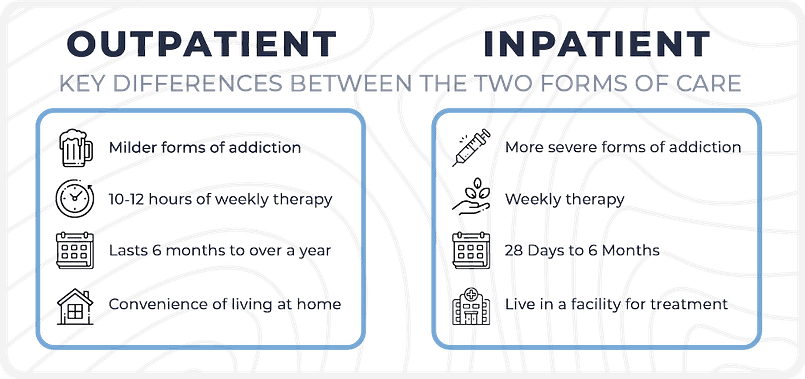
How do you decide between inpatient and outpatient rehab?
The choice between inpatient and outpatient care depends primarily on the severity of addiction, your living environment, and your personal responsibilities. Inpatient rehab provides 24/7 medical supervision and structured support, making it ideal for severe addictions, co-occurring disorders, or unstable home environments. Outpatient rehab offers greater flexibility, allowing you to maintain work or family commitments while attending scheduled treatment sessions, which is suitable for those with a strong support system and a lower risk of severe withdrawal.

How long does outpatient rehab last?
Outpatient rehab duration is highly personalized, typically ranging from a few weeks to several months based on individual progress and specific circumstances. Programs generally require a commitment of several hours per day, multiple days per week, to engage in essential therapies. During this time, patients participate in a structured combination of individual counseling, group therapy, family education, and, when appropriate, medication-assisted treatment to build a sustainable foundation for recovery.

How much does rehab cost in Oregon?
Rehab costs in Oregon vary widely but are made more accessible by insurance coverage mandated under the Affordable Care Act, which classifies addiction as a treatable medical condition. The final expense depends on factors such as the type and length of program, the services provided, and your specific insurance plan details. Crestview Recovery can work with you or your loved one to verify insurance coverage.
USING HEALTH INSURANCE AT OUR OUTPATIENT DRUG REHAB CENTER IN PORTLAND, OREGON
GET HELP AT CRESTVIEW RECOVERY

Partial Hospitalization
Everyone who needs addiction recovery requires a different level of care. It all depends on factors such as the severity of a person’s addiction and the type of substance a person has been using. Some individuals can start at an outpatient drug rehab center.

Intensive Outpatient
At Crestview Recovery, we understand that residential treatment might pose challenges for individuals with demanding work or family commitments, limiting their ability to stay away for extended periods. However, we believe that inflexibility shouldn’t hinder your pursuit of recovery or that of your loved ones.

Residential Treatment
If you find yourself in a cycle where your body and mind crave increasing amounts of addictive substances to feel normal, you’re not alone. This escalating tolerance can wreak havoc on your health, disrupt your family life, and generally diminish your quality of life.

Dual Diagnosis
Crestview Recovery’s dual diagnosis treatment program in Portland, Oregon, provides a pathway to hope, adventure, and a robust recovery network. Recognizing the critical link between mental health and substance use, our program is designed to address both aspects concurrently.
You can continue your treatment in our aftercare program, which includes group sessions and sober living in Portland, Oregon, to help keep patients on track for long-term recovery. To learn more about our individualized care, call Crestview Recovery today.