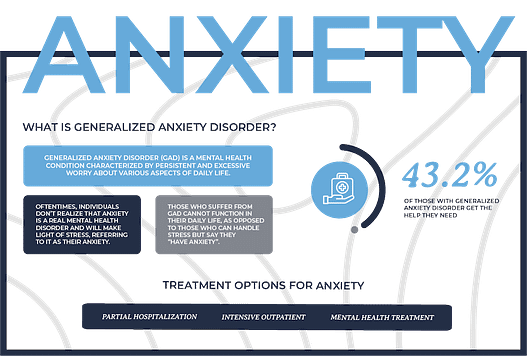
At our anxiety treatment center in Portland, Oregon, we are committed to providing professional support in a safe and compassionate environment where people can begin to heal from anxiety, with comprehensive support tailored to their needs. Whether you need help with panic disorder or separation anxiety disorder, we’re here to help, with access to supportive resources such as a sober living house for individuals who benefit from added structure and stability during recovery. Many people delay care even though only about 25% of people with anxiety disorders receive treatment.
If you feel paralyzed by excessive worry, our anxiety therapy program at Crestview Recovery offers innovative, solution-focused anxiety therapy based on evidence-based approaches to help you find relief naturally.
Healing Begins Here
What is Anxiety?
Every person who’s ever lived has experienced anxiety at some point. An anxiety disorder is a natural emotion acting in a dysfunctional way, often involving anxious or racing thoughts that no longer protect the person. The anxiety is not protecting the person, but working against them and hindering their quality of life.

Types of Anxiety Disorders
OCD consists of an unhealthy cycle wherein a person suffers from intrusive thoughts (obsessions) that can disrupt daily functioning and takes actions in an attempt to placate the worry (compulsion). OCD-related symptoms can also overlap with body dysmorphic disorder, where a person becomes preoccupied with perceived flaws in appearance and may engage in repeated mirror-checking or grooming. However, these actions may not actually have an impact and may only serve to alleviate the obsession temporarily.
Most people have fears, and most fears are rooted in something realistic. Phobias are severe and disproportionate fears that create excessive worry and affect a person’s life. For specific phobias, treatment is usually gradual exposure therapy to the object of fear, often using Exposure and Response Prevention (ERP) to build tolerance to feared triggers over time. In vivo exposure can also help clients practice managing fear in real-world situations.
Many people become nervous in social situations. Social anxiety disorder is a disproportionate expression of those feelings, where social fears become overwhelming, and the person feels incredible fear and anxiety in social situations. They may feel like they are consistently being watched or judged for their actions, and that fear may affect social interactions, social events, and even groups. Treatment can help rebuild confidence in social settings over time.
This anxiety disorder is somewhat related to social anxiety, in that the person is unable to or is afraid to speak during certain situations. This typically affects children, but anyone of any age can be affected.
Generalized Anxiety Disorder involves ongoing excessive worry lasting at least six months. This worry often has no discernible cause, a defining characteristic of GAD. This disorder can take many forms and types, affecting individuals differently. Difficulty controlling these fears frequently leads to racing thoughts, unhelpful thought patterns, restlessness, fatigue, muscle tension, indigestion, insomnia, and irritability.
If feeling anxious is causing problems in your life, our anxiety counseling program at Crestview offers outpatient anxiety treatment programs designed to help clients manage the fears that are holding them back. Our program provides clients with practical tools to manage and alleviate anxiety symptoms, supporting the development of healthy coping mechanisms.
Symptoms of an Anxiety Disorder
- Mood changes
- Feelings of guilt
- Weight gain or weight loss
- Insomnia
- Feeling hopeless
- Need for control
- Fits of acute fear or anxiety, also known as anxiety attacks
Individuals may turn to alcohol or other substances as a way to manage their anxiety symptoms. This can provide temporary relief, but the person will need more of the addictive substance over time to feel the same effects.
If feeling anxious is causing problems in your life, or you are dealing with panic attacks, treatment can help. Because anxiety often overlaps with symptoms like hopelessness and low mood, some people also search for TMS treatment for depression near me when standard care hasn’t brought relief. Care can also include practical strategies to manage symptoms in daily life. If you develop an addiction due to this self-medication, it can also worsen trauma-related symptoms, increasing the need for integrated addiction and PTSD treatment that addresses both substance use and underlying mental health challenges together.
Our Approach to Anxiety Therapy and Treatment
Our treatment specialists are master-level experts with years of experience. We are fully accredited by the Joint Commission, which ensures quality and safety in everything we do. We provide comprehensive care through a holistic approach that combines therapy and medication management.
We offer multiple levels of treatment, including:

TINA
“I can’t speak highly enough about Crestview. I am helping my brother navigate his road to recovery from a horrible addiction to alcoholism. He has been in and out of various levels of treatment facilities for about five years but what makes Crestview so special is that his ‘care team’ truly cares about him and communicates with me when I have concerns or questions. It is quite rare to have the unending support of educated and compassionate people that I can talk to and troubleshoot issues with. They communicate better than any facility that my brother has been to over the last five years and they do so with incredible empathy. They have become my second family. I thank them from the bottom of my heart. I recommend Crestview Recovery for struggling addicts that want to feel that their lives truly matter because they do!”
When you opt for outpatient anxiety counseling, you are choosing to take charge of your mental well-being. Unmanaged anxiety affects the self-worth, personal relationships, coping skills of not only the individual but their entire family. To learn more about the broad range of treatment options offered at our Portland mental health center, reach out to us by calling (866)262-0531 or verify your insurance online.
Anxiety Intervention
Healing from anxiety involves not only physical but also emotional recovery. Healing may also involve addressing depression and other co-occurring concerns alongside anxiety. Clinicians also look at the physiological aspects of anxiety, not just emotional symptoms. Recovering from anxiety is a gradual process, and the signs of improvement can be subtle at first. Thankfully, there is hope, whether that looks like coping strategies, ongoing therapy, or medication management.

Start Recovery From Anxiety at Crestview Recovery
To learn more, reach out to us. Verify your insurance online, or ask questions before starting care — support is available.

Anxiety Therapy in Portland FAQs
Many people experience significant, lasting relief from anxiety with the right treatment. While some anxiety disorders require ongoing management, many clients achieve a dramatic reduction in symptoms or see them resolve entirely through therapy, lifestyle changes, and medication (when appropriate). Crestview’s anxiety treatment in Portland is designed to give you practical tools, not just short-term relief.
The length of time someone needs for effective anxiety treatment in Portland varies widely between individuals, and it can also depend on individual needs, including whether they attend in-person or through telehealth appointments. One person may stay for 90 days, and another person with the same condition may leave after three weeks. What matters most is receiving treatment that provides lasting relief.
Anxiety is diagnosed through a comprehensive clinical assessment that evaluates your symptoms (such as panic attacks), their frequency and severity, your medical history, and how anxiety is impacting your daily functioning. Because panic attacks can sometimes feel like a heart attack or like losing control, a thorough assessment helps clarify what’s happening. At Crestview Recovery, our clinicians conduct thorough evaluations to help us build the most effective treatment plan for you.
Cognitive behavioral therapy (CBT) is widely considered the most effective treatment for anxiety disorders. It helps individuals identify and challenge negative thought patterns, address unhelpful thought patterns and anxious thoughts in concrete ways they can use in everyday life, develop practical coping strategies, and reduce the intensity of anxious responses over time. Acceptance and commitment therapy (ACT) is also used, helping clients accept anxious feelings through mindfulness and values-based action.
For anxiety disorders, a licensed therapist or counselor with specialized training in evidence-based approaches (such as CBT or DBT) is typically the best fit. At Crestview Recovery, our clinical team includes master’s-level therapists, licensed counselors, and psychiatrists who specialize in anxiety and co-occurring conditions. During your intake assessment, we will match you with the provider best suited to your specific needs.
Most insurance providers will cover anxiety therapy and treatment within the coverage area. But the extent of coverage can vary across providers and individual plans. It’s advised that individuals entering anxiety treatment verify insurance coverage beforehand so they can focus solely on their recovery.