Many factors can contribute to the development of a mental health disorder, such as drug or alcohol addiction. Consequently, Crestview Recovery includes trauma-informed therapy as part of our mental health and addiction treatment curriculum. Discover what trauma therapy is and how it can help individuals overcome adversity and develop healthy coping mechanisms after a traumatic event.

Healing Begins Here
Identifying and Understanding Trauma
In fact, someone can be born with a nervous system with a predisposition toward developing post-traumatic stress disorder, but it may also happen after an injury or illness.
Trauma is not always physical on some level because emotional traumas can affect a person’s nervous system and mental health. Even though trauma may be the result of an external source, the effects on the brain manifest in the mind.
People often misunderstand post-traumatic stress disorder because of the correlation between physical injury and psychological damage. However, most traumas are not direct results of physical injuries. Instead, they are the result of exposure to violence, abuse, accidents, and illness. These events can lead a person into a state where their nervous system is in constant fight-or-flight mode because the brain is constantly being activated by stress hormones.

What is Trauma-Informed Therapy?
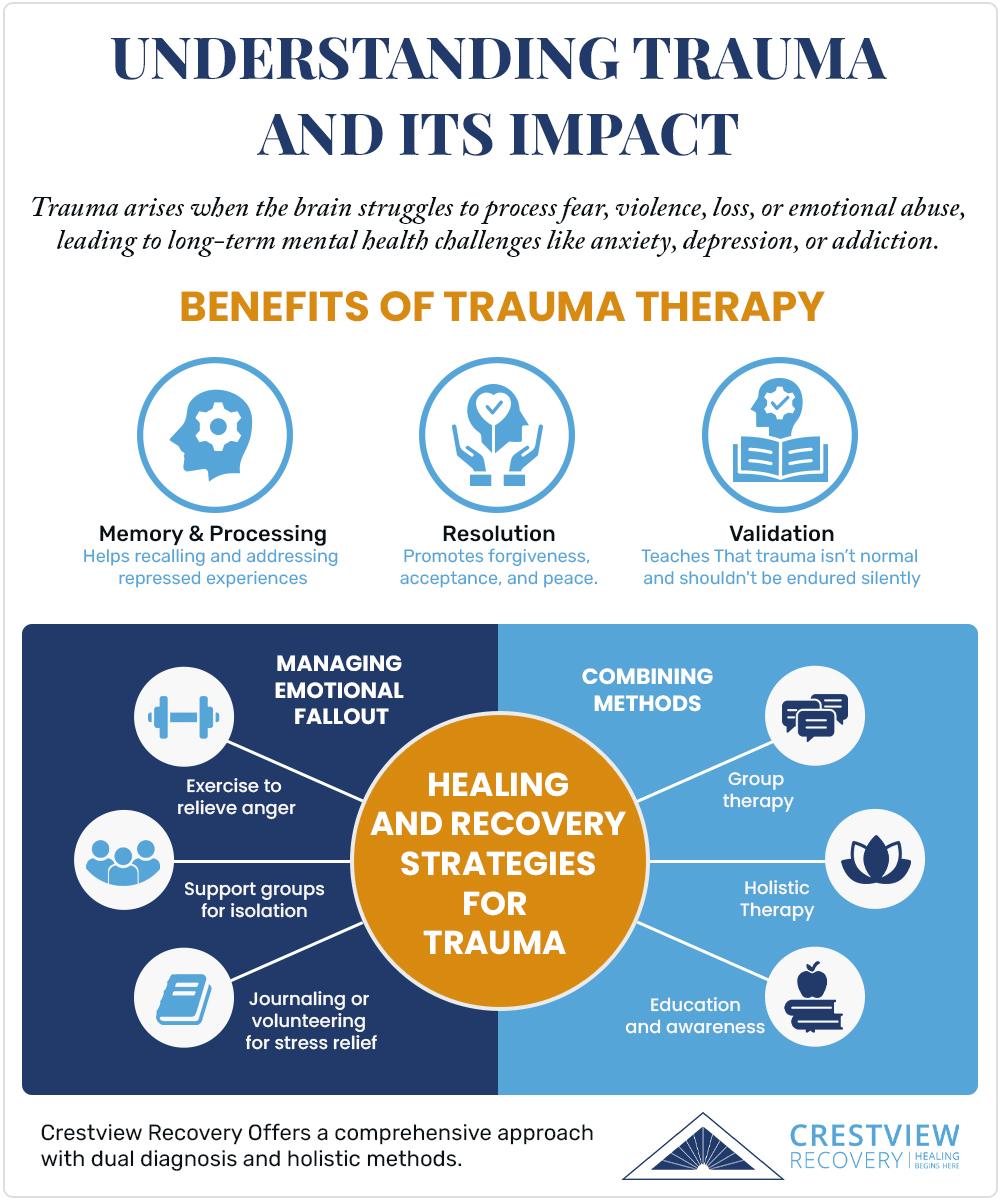
Individual therapy can also help patients understand that trauma isn’t a normal experience. Those who suffered from issues like domestic violence or sexual assault at a young age might believe that all individuals struggle with these issues. Identifying them as wrong and unusual helps prevent individuals from keeping silent in the future.
Finally, therapy can be an outlet for those who haven’t verbalized their trauma in the past. It’s unsettling to discuss trauma for most individuals. However, it’s a necessary step for recovery in many cases, and pairing therapy with a supportive environment, such as Portland sober living, can help reinforce healing and long-term sobriety. Patients might talk about a traumatic experience, such as:
- Witnessing a violent crime
- Being the victim of a physical attack
- Being a victim of sexual abuse or assault
- Military action
- Domestic abuse
- A natural disaster
Trauma-informed therapy can help patients in a number of ways. It can help them to remember and process a repressed trauma and allow them to talk about their experience in a safe and confidential setting. If you or someone you know is struggling with the effects of trauma, consider talking to a mental health professional about trauma-informed therapy.
Using Therapy to Create Resolution
Far too many people in therapy blame themselves for trauma in their past. This is misplaced and misguided, but granting inner forgiveness isn’t always easy. Therapy can help eliminate guilt and grant peace to those tormented by traumatic experiences.
Therapy is an excellent outlet for those struggling to accept what has happened. It can provide a sense of understanding and peace in the face of tragedy.
No matter what form resolution takes, it can be an important step in the healing process. It can give individuals a sense of control and peace. It can allow them to move on with their lives in a more positive way.
Creating Ways to Deal with the Ramifications of Trauma
In the case of patients who become angry, physical exercise might be a way to find relief. For patients who feel isolated and alone when traumatic memories crop up, finding a local support recovery group meeting can be critical. Journaling, cooking, singing, and volunteering are all potential sources of comfort as well.

Trauma Therapy FAQ
There isn’t a “best” type of therapy for trauma, because the efficacy of treatment often depends on personal factors. At Crestview Recovery, we create custom treatment plans for each client to ensure we offer the best possible therapy program to facilitate healing. We commonly utilize Eye Movement Desensitization and Reprocessing (EMDR), Cognitive Behavioral Therapy (CBT), and Dialectical Behavior Therapy based on client assessment. The most suitable approach depends on your unique experiences, symptoms, and personal therapeutic goals.
The length of trauma therapy can depend on the severity of symptoms and the complexity of the trauma. Typically, individuals attend trauma therapy for several months or even years. Each session is between 45 and 60 minutes, in which the therapist guides their client to address unhealthy and unhelpful thoughts and emotions they have related to the traumatic event.
Releasing trauma stored in the body involves therapeutic techniques that address physical sensations and stress responses. Somatic therapies, mindfulness, breathwork, and sensorimotor psychotherapy are all methods designed to help process and discharge this pent-up physiological energy. This process helps to resolve the fight-flight-freeze responses that remain trapped in the nervous system long after a traumatic event.
Healing trauma triggers involves learning to manage the intense emotional and physical reactions they cause through specific therapeutic skills. In therapy, you will learn grounding techniques, emotional regulation skills, and work to process the underlying memory so the trigger loses its power. Over time, this allows you to respond to reminders with greater choice and resilience rather than an automatic distress response.
Yes, trauma therapy is typically covered by most major insurance plans. Coverage details, such as copays, session limits, and in-network provider requirements, vary depending on your insurance provider and plan. Our admissions team at Crestview Recovery can help you verify your insurance benefits and understand your specific coverage and any associated costs.
Trauma Therapy Program in Portland, Oregon
Contact us today to learn more about addiction therapy services and begin taking the first steps toward a lifetime of wellness.