One of the most popular and effective methods of treatment is individual therapy for addiction. Working with a therapist’s undivided attention and focusing on overcoming substance abuse based on your personal history can provide many benefits. Take a closer look at why one-on-one therapy works and how it can be beneficial to those in addiction recovery.

Healing Begins Here
How Individual Therapy Works For Substance Abuse
Individual therapy can address the specific problems a person might have. In the world of addiction treatment, common problems might be the shame that society associates with drug or alcohol addiction, the difficulty of recovery withdrawal, or struggles with relapse. Certain modalities of individual therapy, such as cognitive-behavioral therapy, focus on the actions people take that lead to unfavorable outcomes. Other forms, such as dialectical behavioral therapy, help to build resilience skills that help with overall healing from substance abuse.
Above all, individual therapy works by allowing patients to have a safe space where they can share information without judgment. Therapists are in a unique position where patients trust them with sensitive information. Patients know that their therapists won’t pass judgment or cause problems in their relationships or careers based on what is said in an individual session. This is often essential support when recovering from addiction, rebuilding relationships with family members, and other aspects of healing from substance abuse.


Individual Therapy Encourages Better Communication Skills
In one-on-one therapy sessions, patients can significantly improve their communication. Therapists ask specific questions that help their patients share information. Additionally, patients have to think critically and be specific about their responses. This form of therapy also allows the patient to feel heard and understood by someone. This is not always easy to do while in recovery from substance abuse.
Do not wait to get individual treatment for drug or alcohol addiction.
Contact Crestview Recovery today to learn more about our addiction treatment programs..
Individual Therapy For Addiction Can Reach Deeper Than Group Therapy
For example, not all patients feel comfortable sharing their past trauma with a large group. However, a history of trauma might be a key piece of information to help individuals recover from addiction. Similarly, patients might not want to share that they are having suicidal thoughts with their peers. Revealing this to a therapist is much easier. In individual therapy, there is a safe space and understanding of privacy.
Group therapy is a wonderful way to feel connected to peers and to discuss general topics. For more in-depth conversations and exploration into life history, individual therapy is ideal.
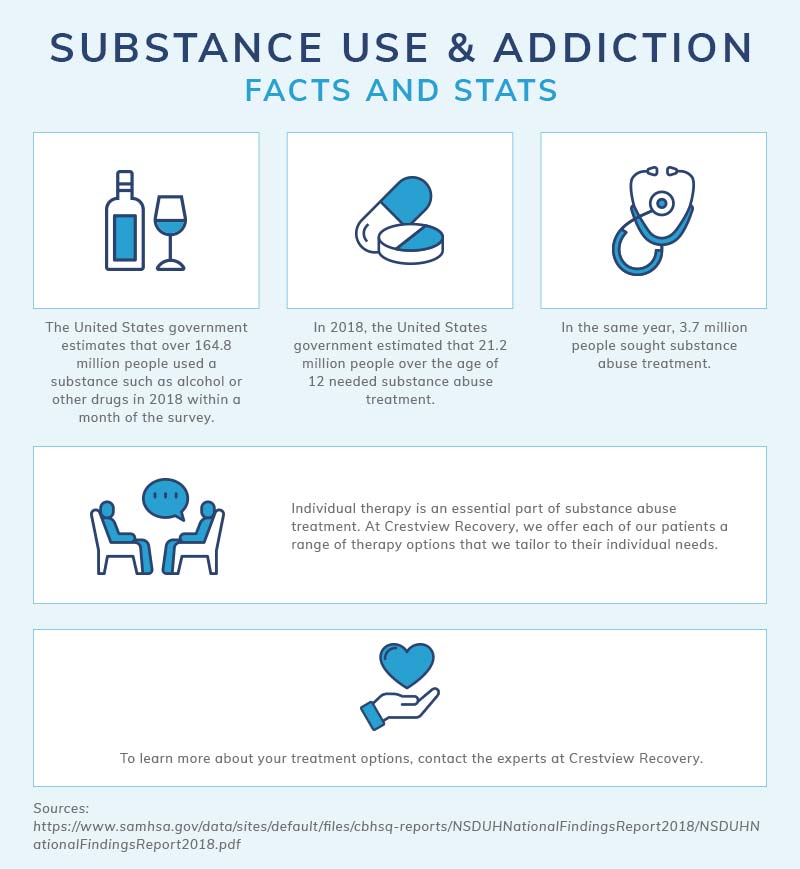
Individual Therapy For Addiction Can Help With Other Forms of Substance Abuse Treatment
For example, dialectical behavioral therapy helps to build skills in tolerating stressful situations. This is no doubt helpful in situations where one may be tempted to turn to substance abuse to cope with stress. But within addiction treatment, it may also help within a session of family therapy when you’re hearing about how your use of drugs affected someone you care about.
In sessions of individual therapy, it’s possible to safely role-play out situations that eventually led you to substance abuse. The safety and intimacy of individual therapy work allow the individual to reflect and ask questions that may feel wrong in a family therapy session (or a group setting in general).
Individual Counseling is Designed For Individual Needs
Deeper Than General Group Therapy
In a one-on-one setting, patients can bring up specific issues that might only apply to them. Parenting, relapse prevention techniques, or mental health can all be the focus of therapy sessions in this more private setting.
Group therapy is a wonderful way to feel connected to peers and to discuss general topics. For more in-depth conversations and exploration, individual therapy is ideal.
Types of Therapy For Substance Abuse
There’s no need to confine yourself to one therapy on your journey to recovery, one type of therapist, or even one type of therapy session. Therapy options you can choose so you can get started on mental health disorder treatment include:
- Cognitive-behavioral therapy: This type of therapy requires you to look deeper into the cycle of emotions, thoughts, and actions. In CBT, we will help you to address negative cycles and replace them with healthy ones.
- Dialectical behavioral therapy: During this therapy, you will work to identify how your negative emotions, thoughts, and actions influence your social interactions. From there, you can work on building and repairing healthy relationships.
- Yoga therapy: Yoga therapy is an excellent option to treat your body, mind, and soul. You will learn how to address stress, treat physical pain, and integrate your body and soul.
- Mindfulness meditation therapy: This therapy, in combination with cognitive-behavioral therapy, is an excellent option to teach you to control your thoughts.
Individual Therapy FAQ
Individual therapy is considered very effective. It not only helps treat behavioral health symptoms but also teaches key skills such as emotional regulation, goal setting, and coping strategies. Some modalities of individual therapy may be more effective for an individual than others, depending on preferences and needs.
Individual therapy sessions typically last 45-50 minutes. Depending on how often you schedule sessions, you may continue therapy for months or years. This gives you time to work on personal goals and monitor progress. If you are participating in therapy for a rehab program, the duration of your therapy journey may depend on the length of your program.
The most common frequencies for therapy sessions are weekly, biweekly, or monthly. The frequency of your therapy sessions depends on several factors, such as need, scheduling availability, and preference. Often, therapists will schedule appointments closer together at the start of an individual’s therapy journey to build a relationship with their client.
The goals of individual therapy are completely customizable; you and your therapist will work together to set them, ensuring your sessions align with your expectations and needs. Throughout your treatment, you and your therapist will reexamine these goals, recognize progress, and adjust them when appropriate. For example, if you are attending individual therapy for substance abuse, you may set a goal to identify your triggers. Once you and your therapist identify those triggers, you can work together to set new goals.
Yes, individual therapy at Crestview Recovery is typically covered by insurance. However, coverage depends on factors such as your insurance provider and specific service. We work with a variety of insurance providers and are happy to help you verify your insurance and confirm coverage details.
Heal From Substance Abuse at Crestview Recovery
Regardless of what your addiction is or how long you have suffered from it, the drug and alcohol rehab recovery staff at Crestview Recovery wants to help you. Contact us at our facility in Portland, Oregon, and take the first steps toward the wellness you deserve.
Stop living your life in the shadow of addiction.
Contact us at (888) 910-9526 to learn more and start your journey of recovery.