At Crestview Recovery in Portland, Oregon, we offer a cocaine addiction treatment program to help clients move forward in their recovery. Whether you are struggling with cocaine use yourself, trying to help a loved one find treatment, or comparing options for cocaine dependency, this guide explains what rehab involves and what recovery can look like.

Healing Begins Here
What is Cocaine Addiction?
How Does Cocaine Addiction Start?
Cocaine may seem attractive to some because it is a stimulant that produces effects of euphoria and alertness similar to caffeine. But it’s not comparable at all to drinking a few cups of strong coffee. Cocaine is addictive, expensive, and dangerous. Over time, cocaine negatively affects every part of the body, with the potential for severe long-term effects. It can cause genetic changes in brain cells, nerve cells, and proteins, among other permanent damage.
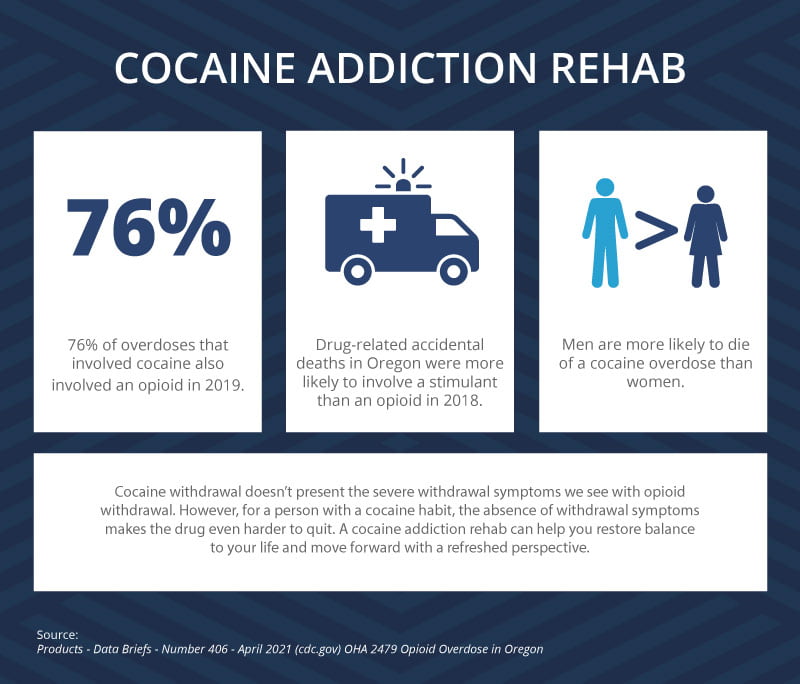

What Are the Signs of Cocaine Addiction?
- Pupil dilation, fidgeting, muscle tics, and hyperactivity
- Significant weight loss
- Substantial mood swings, such as alternating lethargy and hyperactivity
- Social and occupational dysfunction
- Loss of interest in former passions and hobbies
- Spending all of one’s time and money on obtaining and using cocaine
The Cocaine Withdrawal Timeline
- Hours 1-24: Fatigue, increased appetite, and strong cravings
- Days 1-3: Depression, anxiety, irritability, and intense cravings peak
- Weeks 1-4: Ongoing mood disturbances, sleep disruption, and persistent cravings
- Months 1-6+: Psychological cravings can persist and remain a major relapse risk
Without professional help, the psychological component of cocaine withdrawal makes recovery extremely difficult. At Crestview Recovery, our team is experienced in helping clients manage all stages of this process.

Our Cocaine Addiction Treatment Approach
For those who need a higher level of care, Crestview’s residential treatment program provides a structured, supportive environment focused on therapy and recovery skill-building, away from the triggers and stressors of daily life. Clients live on-site and receive round-the-clock care from a dedicated team of addiction specialists, making this level of care similar to inpatient treatment and allowing them to focus entirely on healing and building the foundation for a sober future, which commonly lasts 30 to 90 days on average.
At Crestview Recovery, we offer several modalities of evidence-based therapies, which can be combined to create a comprehensive, individualized treatment plan.
Cognitive behavioral therapy (CBT) is one of the most effective evidence based treatment tools in cocaine addiction treatment. We also use motivational interviewing to help clients strengthen their commitment to change. Contingency management may be used as a behavioral approach that rewards drug-free progress with incentives. By developing healthier coping strategies, clients build the mental resilience needed to maintain long-term sobriety.
Recovery is rarely a journey taken alone. Our group counseling sessions bring together individuals who understand the unique challenges of cocaine addiction, creating a space for honest conversation, mutual encouragement, and shared accountability. That sense of connection can continue after primary treatment through support groups. These connections often become a cornerstone of lasting recovery.
Cocaine addiction frequently involves co-occurring conditions such as depression, anxiety, or PTSD. Our dual diagnosis program addresses both the addiction and any co-occurring mental health needs simultaneously, ensuring that the root causes of substance use are treated, not just the symptoms.
Every person’s path to addiction is different, and so is their path to recovery, and individual therapy can help clients address mental health challenges that contribute to cocaine use. One-on-one therapy sessions give clients dedicated time with a licensed counselor to work through personal history, trauma, relationship challenges, and the specific circumstances surrounding their cocaine use while building a personalized treatment process for recovery journey.
Healing from addiction goes beyond the mind. It involves working to heal the whole person, acknowledging the impact of drug addiction on all aspects of the person’s life. Crestview incorporates holistic approaches like mindfulness education, yoga, and nutritional support to help clients restore physical well-being, reduce stress, and rediscover a sense of balance and purpose in everyday life, supporting long term healing rather than only short-term symptom relief.
Levels of Care for Cocaine Addiction
- Outpatient programs: Standard outpatient care provides ongoing therapeutic support for individuals with milder cocaine addiction, allowing them to attend counseling sessions while maintaining work, school, and family commitments.
- Intensive outpatient program (IOP): IOP offers a more structured level of care than standard outpatient treatment, with clients attending therapy several days per week for several hours each session to build coping skills and prevent relapse.
- Partial hospitalization program (PHP): PHP provides a higher level of structure and clinical support than IOP while still allowing clients to return home each evening, making it an ideal step-down option after residential treatment or a step-up from outpatient care.
- Residential or inpatient treatment: Residential programs offer 24/7 supervision and a substance-free living environment, providing the most intensive level of care for individuals with severe cocaine addiction, unstable living situations, or co-occurring mental health conditions.
For more severe addiction, residential treatment may be recommended, while outpatient treatment may still be appropriate depending on symptom severity, support at home, and any related medical care needs. The right level of care is determined by the treatment team during intake based on individual needs, insurance, and other practical factors.

Start Your Journey to Recovery at Crestview Recovery
If you or someone you love is struggling with cocaine addiction, contact Crestview Recovery today to connect with a treatment center and start care.
FAQs About Cocaine Addiction Treatment in Portland, OR
Cocaine addiction is diagnosed by a medical or mental health professional through a clinical assessment that evaluates patterns of use, physical and psychological dependence, and the impact of cocaine on a person’s daily functioning.
Cocaine addiction treatment typically includes detoxification and therapy, and while there are currently no FDA-approved medications specifically for cocaine addiction, care still focuses primarily on behavioral therapies. Medication-assisted treatment options may still be available for broader addiction recovery needs when clinically appropriate.
Every treatment program has positive and negative aspects. There’s no “perfect” addiction treatment program, except for any program that helps someone achieve sustained recovery. For example: Inpatient treatment is often best for people who have tried recovery and failed, while programs like a partial hospitalization program (PHP) can serve people with supportive home environments who may need medical support.
Cognitive behavioral therapy (CBT) is the most evidence-based approach, helping clients identify triggers, build coping skills, and change the thought patterns that fuel cocaine use. At Crestview Recovery, we combine CBT with group therapy, dual diagnosis support, and holistic care for a comprehensive cocaine addiction treatment program in Portland, with ongoing outpatient sessions helping support long term recovery after primary treatment.
Cocaine withdrawal typically unfolds in phases, and it can involve serious medical complications that should be monitored professionally. In the first 24 hours after stopping use, individuals may experience fatigue, increased appetite, and strong cravings. Over the next one to three weeks, symptoms such as depression, anxiety, irritability, and difficulty concentrating are common. Intense cravings can persist for months and are a major relapse risk. Cocaine also affects the cardiovascular system, which can contribute to emergencies such as heart attack and other cardiac complications that may require intervention.