Kratom is a legal, unregulated supplement that can cause dependence and withdrawal, especially with higher-dose, opioid-like use. Crestview Recovery treats kratom addiction with an individualized approach, including dual diagnosis care. Our residential treatment program offers a structured, supervised environment to safely withdraw and build lasting recovery skills. Contact Crestview Recovery today to take the first step toward healing.

Healing Begins Here
What Is Kratom?
Kratom acts in a dose-dependent way: at low doses, it produces stimulant-like effects; at higher doses, it produces opioid-like effects, including pain relief tied to its interaction with the mu-opioid receptor. Because of this, some people use kratom to ease opioid withdrawal symptoms, similar to how caffeine or nicotine might be used.
But like any mind-altering substance, repeated use can lead to cravings, dependence, and adverse side effects, which is why professional guidance matters, especially if stopping on your own triggers withdrawal or relapse.
Is Kratom Addictive or Can It Cause Kratom Dependence?
What Are the Signs of Kratom Addiction?
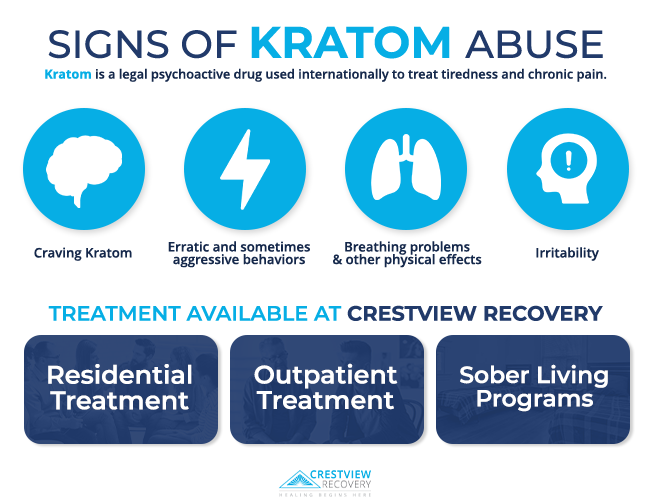
- Using kratom in larger amounts or more frequently than intended
- Needing higher doses to achieve the same effects (tolerance)
- Experiencing withdrawal symptoms, such as nausea, irritability, or muscle aches, when not using
- Making repeated unsuccessful attempts to cut back or quit
- Spending significant time obtaining, using, or recovering from kratom’s effects
- Continuing to use despite negative impacts on work, relationships, or health
- Losing interest in activities or responsibilities once considered important
- Using kratom to cope with stress, anxiety, or emotional discomfort
- Concealing kratom use from friends or family
If you or someone you love is experiencing several of these signs, it may be time to seek professional support.

Kratom Addiction Treatment
Since kratom acts on the same mu-opioid receptors as opioids, withdrawal can produce symptoms similar to opioid withdrawal, including nausea and vomiting, which often peak 1-3 days after last use and can last up to two weeks. Crestview’s MAT program may use off-label medications such as buprenorphine or buprenorphine-naloxone to help reduce these withdrawal symptoms and cravings, allowing clients to stabilize more comfortably. Some individuals may also benefit from dihydrocodeine-lofexidine, though research on its effectiveness specifically for kratom withdrawal is still limited. MAT is paired with therapy to address the psychological aspects of dependence, not just the physical symptoms.
For clients who need a structured, immersive environment to begin recovery, Crestview’s residential addiction program provides 24/7 support in a live-in setting. This level of care removes clients from triggers and stressors that may contribute to continued kratom use, allowing them to focus fully on healing. Residential treatment combines individual therapy, group sessions, and holistic approaches to help clients build the coping skills and self-awareness needed for lasting sobriety.
As clients stabilize, Crestview’s PHP for addiction offers a step down in intensity while still providing several hours of structured treatment each day. Clients return home or to sober living in the evenings, allowing them to begin practicing recovery skills in real-world settings while maintaining a strong support system during the day.
An intensive outpatient program provides continued therapy and accountability for clients transitioning back into daily life, whether that means returning to work, school, or family responsibilities. Sessions are typically scheduled several times per week, giving clients flexibility while still receiving the consistent support needed to prevent relapse.
Most people struggling with kratom addiction have underlying mental health conditions, such as depression or anxiety, and some may also be managing a co-occurring opioid use disorder. Crestview’s dual diagnosis treatment addresses both simultaneously, since untreated mental health conditions often drive continued or relapsed drug use. This integrated approach improves the likelihood of sustained recovery.
Recovery doesn’t end after formal treatment. Crestview’s aftercare program helps clients maintain their progress through ongoing support, relapse prevention planning, and connection to a sober community. This continued care is especially important for kratom, where cravings and psychological dependence can persist beyond the initial withdrawal period.
Insurance for Kratom Addiction Treatment
Reach Out to Crestview Recovery Today
Find out more about kratom addiction treatment and what it can do for you. Count on Crestview Recovery for recovery from drug or alcohol addiction. Call today to speak with a specialist about admission to rehab.
Kratom FAQ
Kratom is currently legal and unregulated at the federal level in the United States, though some states and cities have banned or restricted its use. Because it isn’t FDA-approved for medical use, quality and dosage can vary significantly between products.
Yes, kratom can be addictive, particularly with regular or high-dose use. It interacts with the same mu-opioid receptors as opioids, which means repeated use can lead to tolerance, dependence, and withdrawal symptoms when someone tries to stop.
Signs of kratom addiction may include using more than intended, needing higher doses to achieve the same effect, unsuccessful attempts to cut back, withdrawal symptoms between uses, and continuing use despite negative consequences to work, relationships, or health.
Kratom withdrawal can include symptoms such as nausea, vomiting, muscle aches, irritability, anxiety, and insomnia. Symptoms often peak 1-3 days after last use and typically ease within a week, though they can last up to two weeks in some cases.
Yes, Medication-Assisted Treatment (MAT) may help ease kratom withdrawal symptoms. This can include off-label use of medications such as buprenorphine or buprenorphine-naloxone, though more research is needed to confirm their effectiveness specifically for kratom withdrawal.
It depends on the severity of use and individual circumstances. Residential treatment can be especially helpful for those with significant dependence, co-occurring mental health conditions, or a history of relapse, since it provides 24/7 support in a structured environment.
Many people who struggle with kratom addiction also have underlying mental health conditions, such as depression or anxiety. Dual diagnosis treatment addresses both simultaneously, since untreated mental health issues often contribute to continued or relapsed substance use.