What to Expect from a 90-Day Drug Rehab Program
If you choose to attend a 90-day drug addiction treatment center in Oregon, or anywhere else, you can expect intensive accountability and support. The goal of 90-day rehab and long-term rehab is to prepare clients for a lifetime of sobriety. At a 90-day drug addiction treatment center, there is the chance to dig deeper and explore underlying issues related to drug abuse. Recognizing the complexity of addiction as a brain disease, there’s enough time to address, treat, and resolve these issues; clients have a better chance of preventing relapse in the years to come.
Rehab clients should expect a set routine and daily schedule that caters to their individual needs. Routine is a big part of the recovery process. In a 90-day drug addiction treatment center, clients stick to a schedule for a full three months. As a result, the daily routine becomes habitual. Establishing these healthy habits can be a fantastic way to prepare for a life of health, happiness, and meaning after rehab is over.
WHO NEEDS LONG-TERM DRUG REHAB?
Why do some people need long-term drug rehab? Firstly, it has to do with the length of time a person has been addicted to drugs. The longer a person uses drugs, the longer it will take to get clean. Second, there’s the issue of relapse prevention. Those who have relapsed once are at greater risk of it happening again. Therefore, anyone who has relapsed in the past should commit to a long-term program to reduce the chance of it repeating.

Healing Begins Here
BENEFITS OF A 90-DAY DRUG ADDICTION TREATMENT CENTER
Second, having 90 days to recover puts less pressure on clients. A looming deadline for recovery makes some clients anxious. As a result, rehab can be more challenging. Fortunately, long-term rehab removes some of that pressure and anxiety.
Both inpatient treatment programs and outpatient treatment programs play crucial roles in substance addiction recovery, offering benefits such as extended clinical oversight, a safe and drug-free environment, and support for making permanent lifestyle changes, with 90-day formats effectively addressing the needs for deep-rooted addiction recovery and long-term sobriety.
TREATING SUBSTANCE USE DISORDER AND MENTAL HEALTH CONCERNS
Our highly qualified staff members have the experience and temperament needed to serve as therapists, mentors, and coaches. We have designed our evidence-based rehab program around the strategies that work. Our approach to addiction recovery is:
- Practical
- Progress-focused
- Community-oriented
DEPRESSION AS PART OF A DUAL DIAGNOSIS
A few of the potentially deadly combinations of chemicals people could use in an attempt to numb symptoms of depression include:

Opioids
In the past few years, opioid addiction has become a significant problem in the US. More and more people are falling prey to the euphoric effects of opioid painkillers and illicit opioids such as heroin. Whether one has a prescription drug addiction or needs heroin addiction rehab, the addictive nature of opioids makes it difficult to stop taking them once individuals develop a dependency.

Alcohol
Millions of Americans use alcohol at higher levels than recommended, with nearly 30% of young men reporting that they binge drink. But how do you know if casual drinking is turning into an alcohol addiction? And how do you know if you or a loved one needs substance use treatment? Medically supervised detox is essential for alcohol dependence. Crestview Recovery can assist you with these questions and referrals in 90-day care.

Benzodiazepines
Many drugs that are available cause harsh withdrawal symptoms. However, few drugs are worse than benzodiazepines or benzos. Although not typically deadly, benzo withdrawal can be so severe that people use again to make the symptoms stop. Not receiving professional prescription drug addiction rehab help and doing so throws them back into the cycle of addiction.

Stimulants
Cocaine is a stimulant used for its potential to boost energy and create a sense of euphoria. Users snort, inject, or smoke this highly addictive drug. Cocaine addiction can cause heart damage, organ and tissue damage, brain damage, tooth decay, and violent, dysfunctional behavior. Cocaine users typically do not experience dangerous withdrawal symptoms. We help clients move forward in their recovery during substance use treatment.
If you or a person you care about is struggling with mental health issues and chemical dependence, these conditions often trigger one another to the point that it becomes difficult to determine whether symptoms are the result of the mental health disorder of concern or the substance use disorder.

CONSIDER CRESTVIEW RECOVERY FOR LONG-TERM ADDICTION TREATMENT
After completing treatment, our solid alumni program offers a supportive recovery community to help keep people motivated, engaged, and connected. We also offer plenty of holistic therapies to help treat your body, mind, and spirit together. We do our best to help people reconnect with aspects of their personality they may have lost touch with. This is often a precursor to reconnecting with family members and loved ones.
Choosing long-term treatment is an investment in your health, stability, and future. Depending on your needs, care may begin with detox before transitioning into ongoing residential support and recovery resources. Detox typically lasts 3 to 7 days. Detox helps manage withdrawal symptoms safely. Crestview Recovery’s Portland location provides a supportive environment where individuals can focus on building a strong foundation for lasting recovery. To learn more about the program, contact our admissions team or complete our confidential form to discuss your treatment options.
OVERCOMING DRUG ADDICTION AT CRESTVIEW RECOVERY
- Mindfulness meditation therapy
- Holistic therapy
- Cognitive-behavioral therapy
- Dialectical behavioral therapy
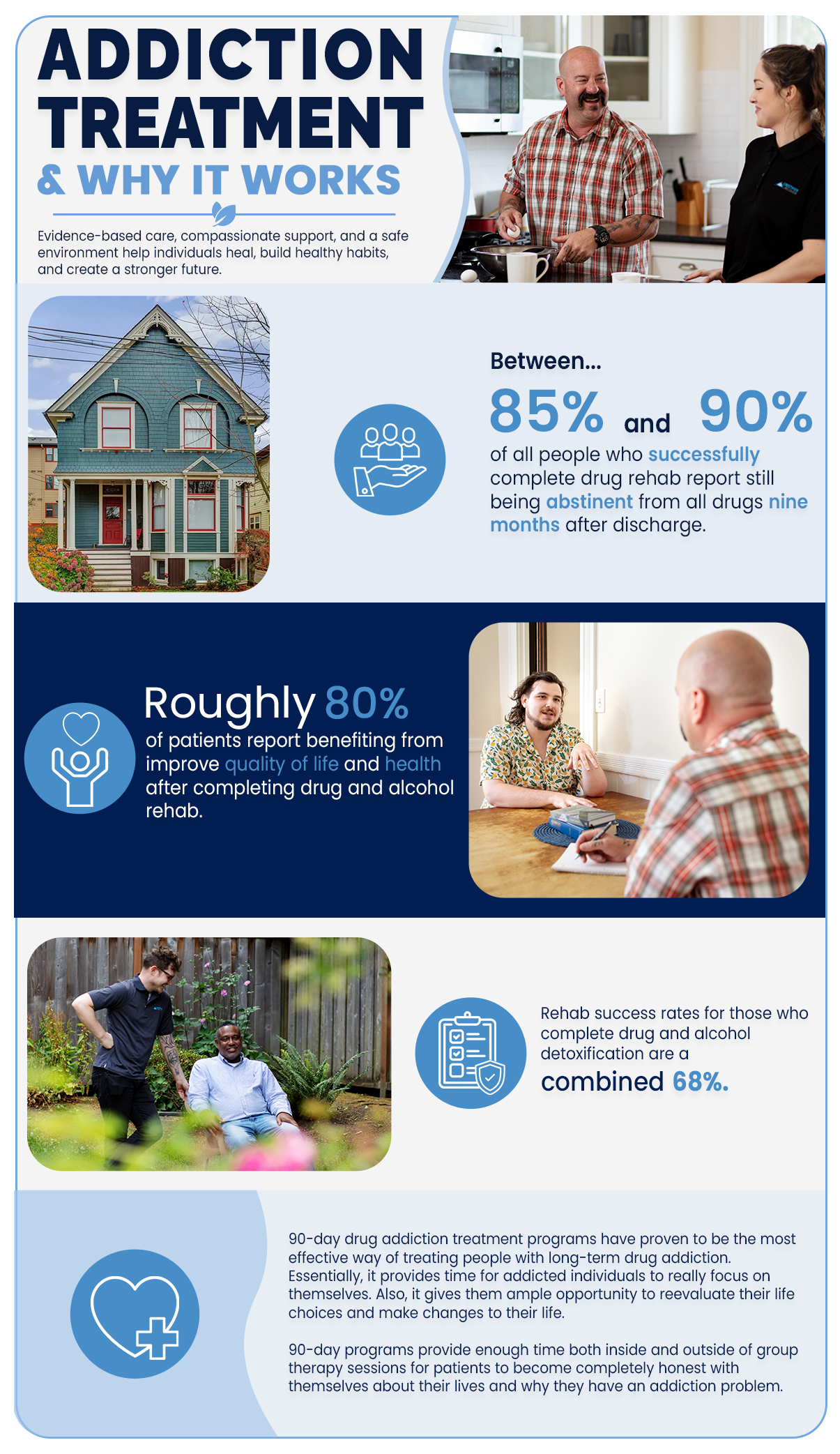
Staying in a substance abuse treatment program for at least 90 days is crucial, as Crestview’s treatment program has been shown to significantly reduce relapse rates and promote sustained recovery, aligning with NIDA’s recommendations for long-term success.


DRUG TREATMENT CAN CHANGE YOUR LIFE
90-Day Rehab Programs FAQs
A 90‑day program for addiction is a structured, long‑term residential treatment plan designed to provide intensive therapy, relapse prevention skills, and ongoing support over three months. This scheduled, extended stay gives individuals time to deeply work through the roots of addiction. Over time, they can build healthy coping strategies and transition more successfully into a sober living program through accountability and care.
The right treatment length depends on factors such as the severity of your substance use, treatment history, risk of relapse, co-occurring mental health conditions, and progress in recovery. A 30-day program may provide enough structure for some individuals, while others benefit from 90 days of continued therapy, skill-building, and support. Crestview Recovery conducts an individualized assessment to help determine the appropriate length of treatment for your needs.
Attending a 90‑day program isn’t a guarantee that addiction is completely “broken.” But it is a highly effective length of time for creating lasting change. Three months of consistent, evidence‑based treatment can give someone the structure, therapeutic support, coping skills, and relapse‑prevention strategies needed to build a strong foundation for long‑term recovery. It also allows time to address underlying issues and establish healthier habits that support sustained sobriety.
At 90 days sober, many people notice clearer thinking, improved health, and stronger emotional stability. A person will likely have better coping skills, a more supportive routine, and greater confidence in managing triggers. While recovery is ongoing, reaching 90 days marks an important milestone. It represents commitment, growth, and progress toward lasting wellness.
Celebrating 90 days sober can be meaningful and empowering. Many people choose to mark the milestone with activities that support their wellness. This can include spending time with loved ones, enjoying a favorite hobby, practicing self‑care, attending a recovery meeting, or setting new recovery goals. The focus is on honoring progress in a healthy and positive way that reinforces commitment to living a sober life.

GET THE HELP YOU NEED FROM CRESTVIEW RECOVERY
At Crestview Recovery in Portland, Oregon, clients can choose from several drug rehab programs that suit their health and their lifestyles. Begin your journey to sobriety. Contact us and start today.
Paying for long-term addiction treatment can feel overwhelming, but insurance may help reduce the cost of care. Most Portland rehabs accept major insurance plans for treatment. Crestview Recovery accepts most insurance and can help you understand your coverage, including whether services are considered in-network with your plan. Our admissions team can work with insurance providers to verify benefits and explain available payment options for any remaining treatment costs. Because insurance coverage varies by plan and provider, we recommend verifying your benefits before beginning treatment.