

Healing Begins Here
Understanding Painkiller Addiction: More Than a Prescription Problem
What makes painkiller addiction particularly difficult to recognize is the legitimate medical context in which it begins. A person recovering from surgery, managing a back injury, or living with chronic pain has a real, valid reason to be taking their medication. The gradual shift from use to dependence can happen so slowly that neither the patient nor their physician notices until the addiction is well established. By then, the brain has reorganized around the presence of the drug, and stopping feels physically and emotionally impossible.
Opioid painkillers work by binding to receptors in the brain and spinal cord, blocking pain signals and simultaneously triggering the release of dopamine, the brain’s primary reward chemical. This is what makes them so effective at relieving pain, and so prone to misuse. The relief they provide is not purely physical. Many people describe an emotional warmth or calm alongside the pain relief, a sensation the brain quickly learns to seek out, particularly in people who are also managing stress, anxiety, depression, or unresolved trauma.
The Hidden Progression: From Prescription to Dependency
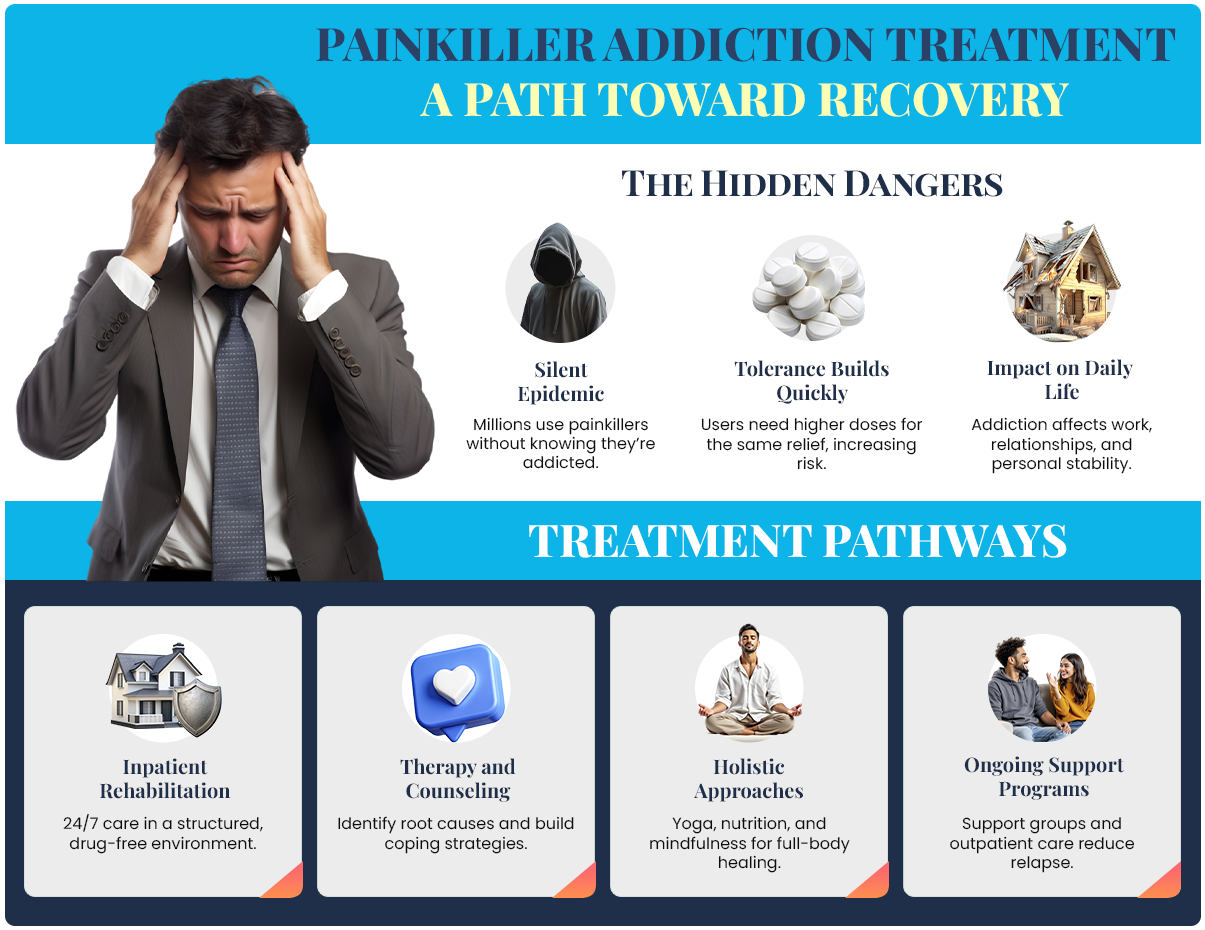
Over time, however, the brain’s chemistry shifts in ways that go well beyond pain management. Tolerance builds, requiring higher doses to achieve the same effect. The brain’s natural capacity to manage discomfort without medication diminishes. And crucially, the definition of “pain” quietly expands; emotional discomfort, stress, and anxiety begin to feel as unbearable as the original physical pain, all managed through the same medication.
This is the point at which many people realize their relationship with painkillers has changed. And it is also the point at which shame often prevents them from asking for help. Many people struggling with painkiller addiction are employed, responsible, family-oriented individuals who never imagined addiction could happen to them. At Crestview, we understand this entirely — and we approach painkiller addiction with the sensitivity and nuance that this specific experience demands.
A particularly important sign of painkiller addiction is the transition to stronger, cheaper substances. As tolerance and dependence grow, prescription painkillers often become too expensive or difficult to obtain. Some people begin turning to heroin as an alternative, which dramatically increases the risk of overdose due to the widespread presence of fentanyl in the illicit drug supply. Recognizing these signs of painkiller addiction and seeking treatment early can help prevent this dangerous escalation.

Recognizing the Signs of Painkiller Addiction
- Using medication to manage emotional discomfort, anxiety, or stress — not just pain
- Feeling unable to cope with daily life without painkillers
- Continuing to use despite side effects such as extreme lethargy, constipation, or cognitive fog
- Personality changes — increased irritability, mood swings, or social withdrawal — particularly between doses
- Spending significant time thinking about the next dose or worried about running out
- Struggling to maintain relationships, employment, or responsibilities due to medication use
- Experiencing physical symptoms — sweating, nausea, muscle aches, or restlessness — when doses are delayed
The physical effects of painkiller use also include slurred speech, trouble with balance, unexplained drowsiness, and constricted pupils. These may be overlooked or normalized, particularly in people with chronic pain conditions, where some level of medication side effects is expected.
Why Painkiller Addiction Requires Specialized Treatment
The first is the question of ongoing pain. Many people who develop painkiller addiction have real, legitimate pain conditions that still need to be managed. Treatment that simply removes the medication without addressing the underlying pain and without developing alternative pain management strategies sets people up for relapse. Crestview’s clinical team works with each client to develop non-opioid pain management approaches as a core part of their recovery plan.
The second is the role of shame and identity. People who developed addiction through a medical prescription often carry profound shame and confusion about their situation. Many do not identify with conventional notions of “addiction,” and may resist treatment because seeking help feels like admitting to something they don’t fully believe is true of them. Our therapists are experienced in working through this specific form of ambivalence with compassion and without judgment.
The third is the risk of escalation. Painkiller addiction does not stay static; it can deepen over time and may lead to heroin use when prescription access becomes limited. Seeking treatment early can interrupt this trajectory before it escalates. If you or a loved one is struggling with painkiller addiction in Portland, Oregon, reach out today and take the first step toward lasting recovery.
Painkiller Addiction Treatment at Crestview Recovery
For many people with painkiller addiction, particularly those who have tried to stop on their own multiple times, residential treatment provides the structured, immersive environment needed to finally make lasting change. Living at Crestview’s facility removes clients from the daily routines and environments in which their painkiller use became normalized — the medicine cabinet, the pharmacy, the chronic pain flare that always ended with a pill.
In residential treatment, the work goes deep. Clients engage in intensive individual therapy to explore the emotional and psychological roots of their dependency, group work to rebuild peer connection and break through isolation, and family therapy to begin repairing the relational damage that addiction frequently causes. Pain management education is woven throughout, helping clients develop a practical toolkit for managing discomfort without opioids, which is especially critical for those returning home to ongoing pain conditions.
Not everyone with painkiller addiction requires or is ready for full residential care. Crestview’s Partial Hospitalization Program (PHP) and Intensive Outpatient Program (IOP) offer meaningful, clinically rigorous treatment for clients who are stable enough to live outside the facility but still need significant support. PHP involves structured full-day programming, while IOP for addiction provides multiple sessions per week built around work or family schedules. Both are particularly well-suited to clients who have professional or caregiving responsibilities they cannot step away from entirely, a common situation among the working adults who most frequently develop painkiller dependency.
A significant proportion of people who develop painkiller addiction are also managing undiagnosed or undertreated depression, anxiety, PTSD, or trauma. In many cases, the emotional relief provided by opioids played as large a role in sustaining the addiction as the physical dependency. At Crestview, dual diagnosis treatment is not a separate track; it is integrated into every level of care, ensuring that the mental health conditions underlying addiction receive the same clinical attention as the substance use itself.
Aftercare planning for painkiller addiction requires particular care, especially for clients who will continue to live with chronic pain conditions after treatment. Crestview’s aftercare team works with each client to establish a sustainable plan that includes alternative pain management strategies, ongoing therapeutic support, sober living options where appropriate, and clear protocols for navigating medical situations in which opioid medications may be recommended. Leaving treatment with a concrete, realistic plan for managing pain without relapsing is what distinguishes long-term recovery from short-term sobriety.
Frequently Asked Questions About Painkiller Addiction Treatment
Physical dependence means the body has adapted to the presence of a medication and will experience withdrawal symptoms if it is stopped abruptly — this can happen to anyone taking opioids long-term, even under careful medical supervision. Addiction goes further, involving a compulsive pattern of use despite negative consequences, difficulty controlling use, and significant preoccupation with obtaining and taking the medication. Many people with painkiller addiction started with dependence and crossed into addiction gradually. Both conditions benefit from professional clinical support, and distinguishing between them is part of what a thorough clinical assessment at Crestview helps to determine.
No. This is one of the most important concerns we hear from people considering treatment, and it is entirely understandable. Crestview’s clinical approach to painkiller addiction includes comprehensive education and support around non-opioid pain management strategies, including physical therapy approaches, mindfulness-based pain reduction, non-opioid medications where appropriate, and other evidence-based methods. The goal is not to leave you without pain management options, but to develop a sustainable approach that does not put your sobriety at risk.
The neurological and physical aspects of painkiller addiction are similar to other opioid addictions, and many of the same treatment approaches apply. However, the clinical and personal context is often quite different. People with painkiller addiction frequently have legitimate ongoing medical needs, carry significant shame around their addiction, and may not identify with conventional addiction narratives. Treatment at Crestview is tailored to address these specific dynamics, including working through the complex feelings that arise when addiction develops through medical treatment rather than recreational use.
Painkiller addiction involves real, measurable changes to brain chemistry that make stopping through willpower alone genuinely difficult; not a sign of weakness or lack of commitment. Without addressing both the physical dependency through proper detox and the psychological patterns through structured therapy, most people will return to use, particularly when pain or stress triggers arise. Relapse is not failure; it is clinical evidence that more comprehensive support is needed. Crestview’s residential and intensive outpatient programs are specifically designed to provide that support.
Yes, and this is one of the most urgent reasons to seek treatment early. As painkiller tolerance increases and prescriptions become harder or more expensive to obtain, some people transition to heroin as a cheaper, more accessible alternative. This escalation dramatically increases overdose risk, particularly given how frequently illicit opioids are now contaminated with fentanyl. Treating painkiller addiction before this transition occurs is significantly safer and more straightforward — which is why early intervention matters so much.
Yes. Crestview offers dedicated men’s and women’s rehab programs that address the distinct ways painkiller addiction can develop and present across genders. Women, for example, are more likely to be prescribed opioids for chronic pain and may develop dependency more quickly due to physiological differences. Men may face greater social pressure to avoid seeking help. Gender-specific programming creates a space where clients can explore these dynamics openly alongside peers with shared experiences.
Yes. Crestview accepts most major insurance plans, including Aetna, Blue Cross Blue Shield, Cigna, Kaiser Permanente, Providence, Moda, and many others. Our admissions team can verify your benefits quickly.