Healing Begins Here
What Is Opioid Addiction?
There is an important distinction between opioid misuse and opioid addiction. A person misusing opioids may be taking them in larger amounts or more frequently than prescribed, but still retains some ability to stop. Someone with an opioid addiction, however, has lost that control entirely. Drug use becomes the central priority in their life, ahead of relationships, employment, health, and personal well-being, even as the consequences grow more serious.
Opioid addiction can develop in anyone, regardless of age, background, or how carefully they initially followed a prescription. Understanding this is essential: addiction is not a moral failing; it is a disease that requires professional treatment. If you or someone you love is struggling with opioid addiction, reach out today to learn how our compassionate team can help you begin your recovery journey.

Signs and Symptoms of Opioid Addiction
- Constant or intense euphoria following drug use
- Increased anxiety or mood swings
- Unusual or erratic sleeping patterns
- Dramatically decreased motivation
- “Nodding off” or sudden drowsiness
- Slowed or shallow breathing
- Poor concentration and cognitive difficulties
- Neglect of responsibilities, relationships, and personal hygiene
- Doctor shopping or seeking multiple prescriptions
Opioid overdose is a life-threatening emergency. If someone has bluish lips, is breathing very slowly, or is unresponsive after taking opioids, call 911 immediately. Prompt opioid overdose treatment and emergency medical care can save lives, reduce the risk of serious complications, and improve the chances of recovery.

How Opioids Affect the Brain
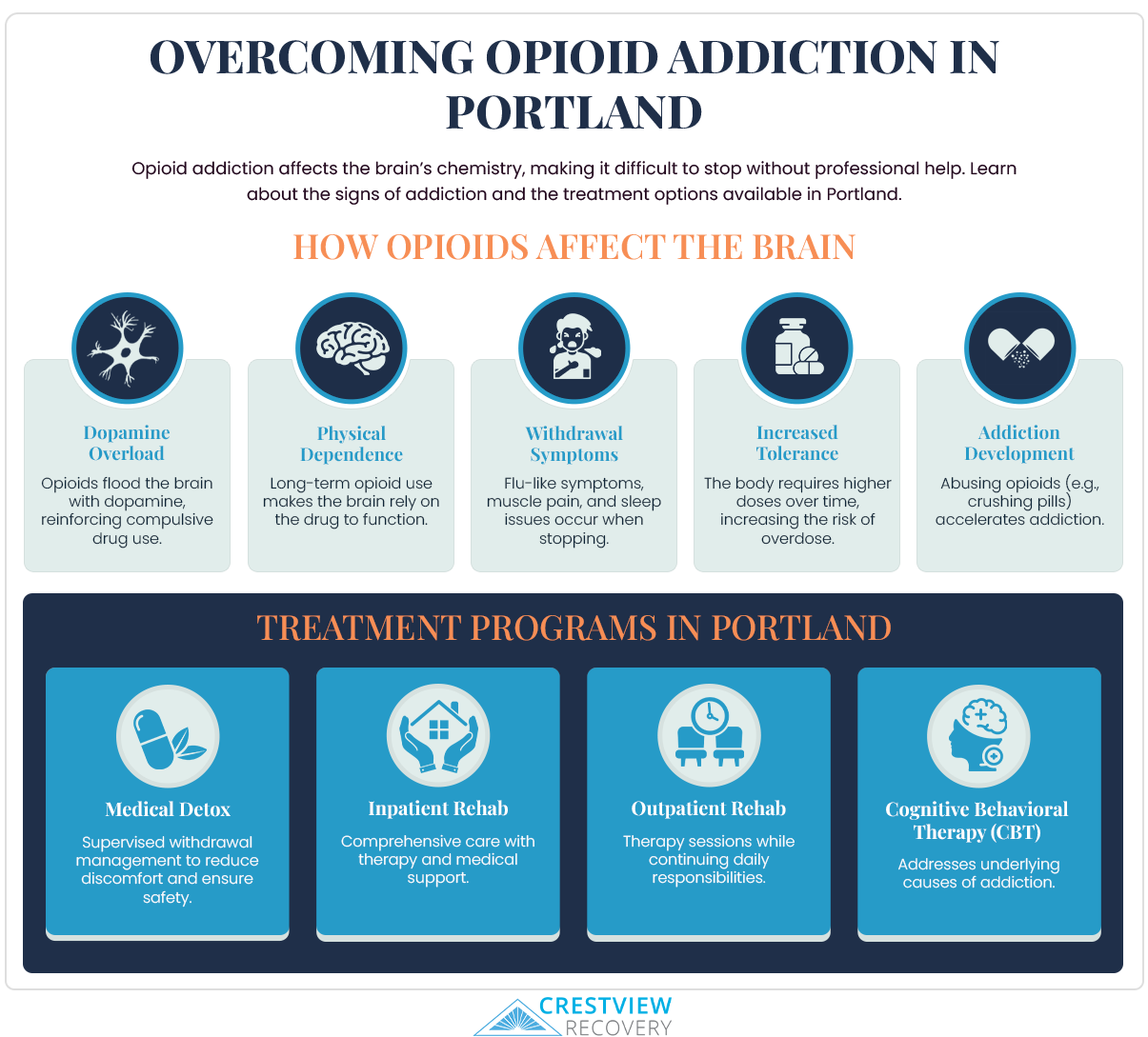
Over time, the brain adapts to the presence of opioids by reducing its own natural dopamine production. The result is that a person needs the drug simply to feel normal, and without it, they experience deeply uncomfortable withdrawal symptoms, including muscle and bone pain, severe nausea, vomiting, insomnia, and uncontrollable leg movements. Understanding the opioid withdrawal timeline can help individuals prepare for the recovery process and highlights why medically supervised treatment is so critical for managing symptoms safely and effectively.
Opioid Addiction Treatment Programs at Crestview Recovery
For many people struggling with opioid addiction, inpatient treatment is the most effective starting point. Our inpatient program provides a structured, immersive environment where clients live at our facility and receive round-the-clock clinical support. Removed from the triggers, stressors, and environments that fuel addiction, clients can focus entirely on healing. Treatment includes individual therapy, group counseling, family sessions, trauma-informed care, and evidence-based programming, all delivered by a team of experienced specialists. For those who need extended time to build a solid foundation, our 90-day residential option offers the depth of care that longer-term recovery demands.
Inpatient treatment is particularly recommended for individuals with severe opioid dependence, a history of relapse, co-occurring mental health conditions, or an unstable home environment. The structured setting, clinical oversight, and peer community of residential care create conditions that significantly improve long-term outcomes.
PHP for opioids provides intensive, structured treatment during daytime hours while allowing clients to return to sober living or home in the evenings. It is an effective step-down from inpatient care or a strong starting point for those who need high-level support without a full residential stay. PHP includes individual therapy, group therapy, family therapy, and trauma therapy delivered across structured treatment days.
Our opioid addiction IOP is designed for clients who are ready to begin rebuilding daily life while continuing meaningful treatment. Clients attend multiple sessions per week covering therapy, relapse prevention strategies, and life skills, providing structure and accountability while allowing them to maintain work, school, or family commitments. IOP is an ideal step-down from PHP as clients gain confidence in their recovery.
For those who need more time, Crestview’s 90 day rehab program provides an immersive, long-term treatment experience. Longer treatment durations often correlate with significantly better recovery outcomes, particularly for opioid addiction. Extended care gives clients the time and space to address deep-rooted patterns, develop lasting coping skills, and build the peer and community connections that sustain long-term sobriety.
Opioid addiction frequently co-occurs with mental health conditions such as depression, anxiety, PTSD, or trauma. Treating only the addiction without addressing these underlying factors dramatically increases the risk of relapse. Crestview’s dual diagnosis program treats both simultaneously, giving clients the comprehensive, integrated support they need for lasting recovery.
Recovery doesn’t end when a treatment program does. Crestview offers robust aftercare planning and sober living options to help clients maintain sobriety and successfully reintegrate into everyday life. Our aftercare programs provide continued therapeutic support, relapse prevention resources, and community connection during the critical transition period following residential or intensive treatment.
Frequently Asked Questions About Opioid Addiction Treatment
Opioid misuse refers to taking opioids in ways not prescribed, higher doses, more frequently, or for non-medical reasons, without necessarily being physically dependent. Opioid addiction is a chronic condition in which a person has lost control over their drug use, experiences intense cravings, and continues using despite serious consequences. People with opioid addiction are typically physically dependent and will experience withdrawal symptoms without the drug. Both conditions benefit from professional treatment, but addiction requires a more comprehensive, structured approach.
For many people, residential treatment offers the greatest chance of long-term recovery success. The immersive, structured environment removes clients from the people, places, and situations that trigger use, while providing round-the-clock clinical support. Inpatient care is especially important for those with severe dependence, a history of relapse, co-occurring mental health conditions, or an unstable living situation. That said, every person’s needs are different, and Crestview’s clinical team works with each individual to determine the most appropriate level of care.
Opioid withdrawal typically produces flu-like symptoms, including muscle and bone pain, nausea, vomiting, sweating, insomnia, and intense cravings. Symptoms can begin within hours of the last dose and peak within a few days. At Crestview, clients undergo medically supervised detox with 24/7 monitoring to manage withdrawal safely and as comfortably as possible, reducing the risk of relapse during this vulnerable phase before transitioning into ongoing treatment. Medications like Suboxone can also ease withdrawal symptoms and cravings. Learn more about how Suboxone addiction treatment in Portland, Oregon supports early opioid recovery.
Yes. Many people struggling with opioid addiction also live with depression, anxiety, PTSD, trauma, or other mental health conditions, and these issues are often deeply intertwined with substance use. Crestview’s dual diagnosis program is specifically designed to address both simultaneously. Treating the whole person, not just the addiction, is central to achieving meaningful, lasting recovery.
Treatment length varies depending on the severity of the addiction, individual history, and personal circumstances. Some clients begin with inpatient residential care and step down through PHP and IOP over several months, while others benefit most from the 90-day extended care program. Crestview’s clinical team evaluates each client individually and adjusts the plan as recovery progresses. Longer treatment durations are consistently associated with better outcomes for opioid addiction.
Crestview uses a combination of evidence-based and holistic therapies tailored to each client’s needs. These include cognitive behavioral therapy (CBT), dialectical behavior therapy (DBT), individual therapy, group counseling, family therapy, trauma therapy, experiential therapies, and 12-step programming. Together, these approaches help clients understand the root causes of their addiction, develop healthy coping strategies, and build the skills and connections needed for lasting sobriety.
Yes. Crestview accepts most major insurance plans, including Aetna, Blue Cross Blue Shield, Cigna, Kaiser Permanente, Providence, Moda, and many others. You can verify your benefits quickly through our online insurance verification tool or by calling our admissions team.