The 12 Steps of AA: What Each Step Means and How to Work It

Alcoholics Anonymous (AA) is a free, peer-led fellowship for people whose drinking has made life unmanageable. Intelligence, early success, and even a sincere desire to quit are often not enough to stop drinking on your own. For people willing to put in the work, the 12 steps offer a clear, proven order for recovery: admit the problem, accept support, take an honest look inward, repair the harm, and keep growing for life.

This guide explains what each step means, how people actually work it, and how the steps fit together. You’ll also learn how Crestview Recovery uses a 12-step recovery program as part of alcohol and drug addiction treatment in Portland, Oregon.

The 12 Steps of Alcoholics Anonymous

AA was founded in 1935 by Bill Wilson and Dr. Bob Smith, two men who were both struggling with alcoholism. The 12 steps were first published in 1939 in the book Alcoholics Anonymous, often called the Big Book. AA has since grown into a worldwide fellowship, and groups like Narcotics Anonymous and Cocaine Anonymous have adapted its steps. The 12 steps also remain a powerful tool in life after rehab.
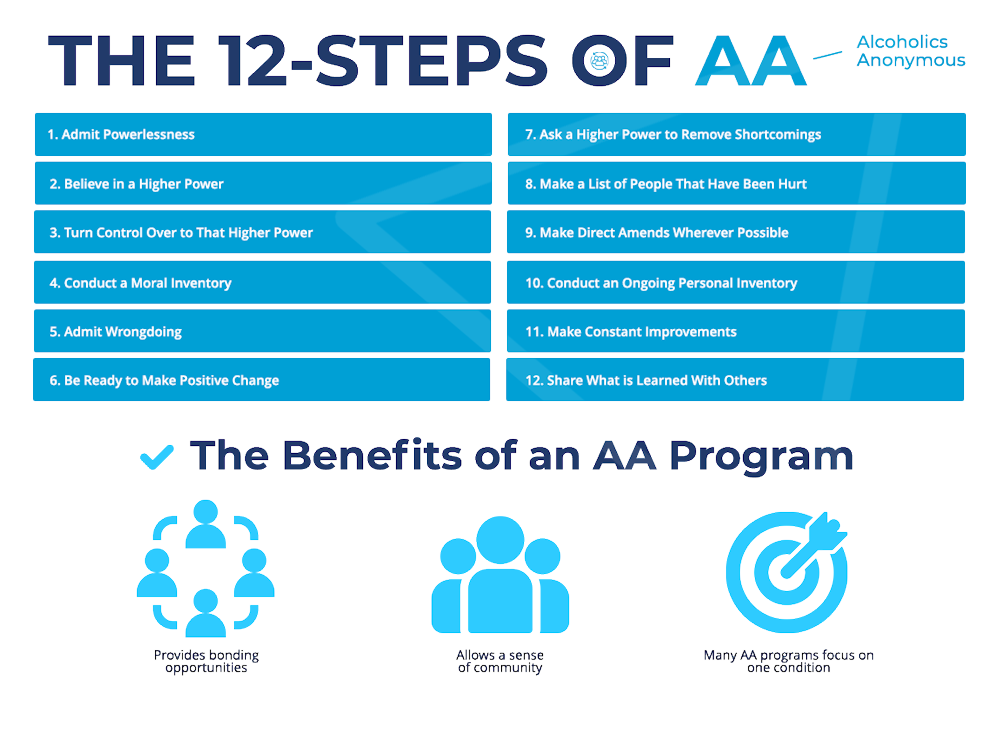
Infographic showing what are the 12 steps of Alcoholics Anonymous

The 12 steps are a spiritual path, not a religious requirement. AA describes the goal as a “psychic change,” meaning a mental, emotional, and spiritual shift in how a person thinks and lives. People of any faith, or no faith, work the steps.

The steps fall into four stages. Steps 1 to 3 build the foundation. Steps 4 to 7 focus on honest self-examination. Steps 8 and 9 repair harm done to others. Steps 10 to 12 keep recovery going for life. Each step is often paired with a spiritual principle, shown below.

StepWhat the step asksPrinciple
1Admit you are powerless over alcohol and your life has become unmanageableHonesty
2Believe a power greater than yourself can restore you to sanityHope
3Decide to turn your will and life over to that higher powerSurrender
4Take a searching, fearless moral inventoryCourage
5Admit the exact nature of your wrongs to your higher power, yourself, and another personIntegrity
6Become entirely ready to have your defects of character removedWillingness
7Humbly ask your higher power to remove your shortcomingsHumility
8List everyone you have harmed and become willing to make amendsLove
9Make direct amends wherever possible, unless doing so would cause harmResponsibility
10Keep taking personal inventory and promptly admit when you are wrongDiscipline
11Use prayer and meditation to improve your connection with your higher powerAwareness
12Carry the message to others and practice these principles in all your affairsService

AA Step 1 asks you to admit that you are powerless over alcohol and that your life has become unmanageable. It is often called the hardest step, because it requires complete honesty with yourself. It is also the foundation: no other step works without it.

What “powerless” really means. Being powerless does not mean you are weak or not strong enough to beat addiction. It means you cannot manage addiction’s effects on your own and need to accept help. Addiction can affect anyone, including a successful lawyer or a loving parent. You may control many choices in your life and still not control your drinking.

What “unmanageable” looks like. Life can seem fine on the surface while drinking quietly takes over. Warning signs include relationship conflict, work problems, and legal trouble. These problems tend to build on each other, and recovery is easier when you get help early.

Signs that drinking has become a problem include:

  • Being unable to limit how much you drink
  • Trying to cut back or stop without success
  • Strong cravings to drink
  • Needing more alcohol to feel the same effect
  • Withdrawal symptoms when you stop
  • Falling behind on duties at home or work
  • Drinking despite the harm it causes

If these sound familiar, learn more about alcohol rehab in Portland.

How to work Step 1. Acceptance is easier with support. Talking honestly with a counselor, sponsor, or sobriety group breaks down the denial that addiction depends on. The support system you build here will carry you through every step that follows.

Step 2 is coming to believe that a power greater than yourself can restore you to sanity. It is known as the “hope step” because it replaces the isolation of addiction with something greater to lean on.

What “restore us to sanity” means. Many people bristle at this phrase. In AA, it refers to the pattern of drinking again and again despite knowing the harm it causes. A common saying in recovery defines insanity as doing the same thing over and over and expecting a different result. Step 2 offers a way out of that cycle.

What counts as a higher power? The 12 steps grew out of Christian principles, but you do not need to be religious to work Step 2. Your higher power is yours to define. People commonly choose:

  • God, Allah, or Buddha
  • Nature or the universe
  • Love or humanity
  • The AA group or the recovery community itself
  • Meditation, music, or art

Agnostics, atheists, and former believers all work this step. What matters is an open mind and the humility to accept help from outside yourself.

How long Step 2 takes. There is no set timeline. For some people, belief arrives quickly; for others, it grows slowly through meetings, treatment, and a relationship with a sponsor.

Step 3 is making a decision to turn your will and your life over to the care of a higher power, as you understand it. The key words are “made a decision.” This step is a choice you make, not a feeling you wait for.

If you have joined AA or entered treatment, you have already started Step 3. You chose to stop managing addiction alone and to trust something outside yourself. Step 3 builds on that by letting go of the need to control every outcome.

How to work Step 3. Turning your will over is a daily practice, not a one-time event. Many people strengthen it through prayer, meditation, or quiet reflection each morning and night. Over time, the relationship with your higher power becomes a source of strength when cravings or stress hit.

Letting go of guilt. Early recovery often brings heavy guilt about the past. Step 3 helps you focus on today rather than wallowing in what you cannot change yet. The work of repairing relationships comes later, in Steps 8 and 9.

Steps 1 to 3 are the foundation of the program and the hardest to understand. A sponsor who has already worked them can answer questions and offer encouragement. Crestview can also help you find an AA meeting in Portland.

Step 4 is making a searching and fearless moral inventory of yourself. A moral inventory is an honest, written look at both your strengths and the patterns that fueled your addiction. “Fearless” means being willing to face uncomfortable truths instead of explaining them away.

What goes into a moral inventory? Look at how drinking has affected your relationships, work or school, health, finances, and self-esteem. Note the harm done, such as broken trust or missed opportunities. Also note what you can build on, such as supportive friends or personal talents.

How to take a moral inventory:

  1. Set aside quiet, uninterrupted time so you do not feel rushed.
  2. Use a journal or worksheet with categories like family, relationships, work, and habits.
  3. Start with a gratitude list to put yourself in a constructive mindset.
  4. List your resentments and why you hold them.
  5. List your fears and how they have shaped your choices.
  6. Identify character defects and the harm they caused to you and others.
  7. Compare your actions to your core values and note where they don’t match.
  8. Review the inventory with a sponsor, counselor, or therapist you trust.

Common challenges. Step 4 often stirs up shame, guilt, and anxiety. Working with a therapist through mental health treatment in Portland can help you process those feelings. If time is the obstacle, work on the inventory a little each day. If writing is hard, type it or speak it aloud while a sponsor takes notes.

Your Step 4 inventory becomes the material for Step 5. You will also revisit it throughout recovery through Step 10.

Step 5 is admitting to your higher power, to yourself, and to another person the exact nature of your wrongs. It means sharing your Step 4 inventory out loud with someone you trust. Saying it to another person ends the secrecy and denial that addiction depends on.

Why Step 5 matters. Honesty breaks denial, and accountability means owning your actions and their consequences. Many people also describe deep relief after sharing what they have carried alone for years.

How to complete Step 5:

  1. Choose someone you trust and feel safe with. Many people choose their sponsor, but it is not required.
  2. Schedule private, unrushed time to meet.
  3. Share your inventory honestly and specifically, holding nothing back.
  4. Listen with an open mind to the other person’s feedback.
  5. Start thinking about who you have harmed, which prepares you for Steps 8 and 9.

Step 6 is becoming entirely ready to have your higher power remove all your defects of character. Its principle is willingness. You don’t have to be perfect; you only have to sincerely want to change.

Common character defects. Defects are habits, attitudes, and behaviors that no longer serve you. Ones people often identify include dishonesty, selfishness, resentment, fear, impatience, and arrogance. Many of these show up in your Step 4 inventory.

Questions to ask yourself in Step 6:

  • Which character defects did I find in my Step 4 inventory?
  • How have these defects hurt me or the people around me?
  • Did my drinking help me cope with or hide these defects?
  • Do I genuinely want to change, even the defects that feel comfortable?

Two Step 6 exercises. First, make a character defect inventory: list each defect, how it shows up, and what a life without it would look like. Second, write three to five positive statements for each defect, such as “I tell the truth now,” and say them each morning and night.

Step 7 is humbly asking your higher power to remove your shortcomings. Step 6 was about becoming ready; Step 7 is taking action. By this point, you are more than halfway through the steps.

What it means to “humbly ask.” Humility is not humiliation. It means setting aside ego and pride, accepting your limits, and asking for help with sincerity. You recognize that willpower alone has not been enough to change these patterns.

How to work Step 7:

  1. Review the defects you identified in Steps 4 and 6.
  2. Through prayer or meditation, ask your higher power, however you define it, to remove them.
  3. Practice the opposite behavior each day, such as honesty in place of dishonesty.
  4. Be patient, since change rarely happens overnight.
  5. Lean on your sponsor, group, or an accountability partner to stay on track.

You do not have to believe in God to complete Step 7. Your higher power can be nature, your inner strength, or the recovery community.

Step 8 is making a list of everyone you have harmed and becoming willing to make amends to them all. This step is about preparation and willingness. The amends themselves come in Step 9.

How to build your Step 8 list. Start with the harms you identified in your Step 4 inventory. Think about relationships damaged and trust broken, and be thorough. Many people include themselves on the list, since addiction causes self-harm too. Then review the list with your sponsor before taking any action.

Why forgiveness matters here. Some people on your list may have hurt you too. Holding on to resentment keeps you stuck, while forgiveness frees you from carrying it. Forgiving can feel like giving up power, or like opening yourself to more hurt. It is easier with time, support, and sometimes family therapy.

Common challenges in Step 8:

  • Fear that people will reject your amends
  • Worry about reopening painful memories for others
  • People who can’t be reached or have passed away
  • Guilt, shame, and anxiety as you write the list

These feelings are normal. Becoming willing, even if it happens slowly, is what this step asks of you.

Step 9 is making direct amends to the people you have harmed, except when doing so would injure them or others. Making amends goes beyond saying “I’m sorry.” It means taking responsibility, acknowledging the harm, and acting to make things right.

Types of amends. The right kind depends on the situation and on what is safe for the other person.

TypeWhat it looks likeWhen it fits
DirectA face-to-face conversation where you own the harm and listenUsually the most meaningful choice, when safe for both people
WrittenA sincere, concise letter that expects nothing in returnWhen meeting in person isn’t possible or wise
LivingA lasting change in behavior, such as staying sober and keeping promisesAlways, alongside any other amends
SymbolicCharity, service, or a private letter or journal entryWhen the person has died, or contact would cause harm

Amends can also be practical, such as repaying money you owe or repairing damaged property.

What to expect. Not everyone will be ready to forgive, and that is their right. Some legal or financial consequences may remain after you make amends. Focus on doing your part honestly, then let the outcome go. Over time, amends help rebuild trust, reduce resentment on both sides, and strengthen your commitment to sobriety.

Navigating hard amends. Work at a pace your sponsor or counselor agrees is healthy, since rushing can do more harm. If a direct conversation feels too daunting, a written letter can be a first step. Making amends is mainly about your commitment to change, not the other person’s response.

Step 10 is continuing to take personal inventory and promptly admitting when you are wrong. It turns the one-time work of Steps 4 through 9 into a daily habit. Recovery is lifelong, and Step 10 keeps small problems from growing into a relapse.

A nightly Step 10 check-in. Before bed, ask yourself:

  • Was I resentful, dishonest, or fearful today?
  • Did I harm anyone with my words or actions?
  • What could I have done better?
  • Did I rely on myself alone instead of my support system or higher power?

How to practice Step 10 every day:

  1. Do a short nightly review using the questions above.
  2. Keep a journal so you can spot patterns over weeks and months.
  3. Talk your inventory through with a sponsor, or bring it to group therapy.
  4. Watch for recurring themes, which point to areas that need more work.
  5. Make amends quickly when you are wrong, before guilt or resentment builds.

Why it protects sobriety. Regular reflection helps you notice triggers and cravings before they escalate. It also builds emotional sobriety, the ability to handle hard feelings without turning to alcohol. Watch for denial, rationalizing, and complacency, the three habits most likely to stall this step.

Step 11 is using prayer and meditation to improve your conscious contact with your higher power, as you understand it. People in AA describe it as asking only for knowledge of that power’s will and the strength to carry it out. For religious people, this often means daily prayer; for others, it means meditation or quiet reflection.

How people practice Step 11. Many start and end each day with a few minutes of prayer, meditation, or mindful breathing. Others use journaling, time in nature, or reading recovery literature. The practice matters more than the form, and consistency matters more than length.

Why it matters. Recovery does not happen all at once. Step 11 builds calm, focus, and a steady connection to something beyond yourself. That connection helps you pause before reacting and supports decisions that protect your sobriety. Crestview incorporates holistic therapy alongside 12-step programming.

Step 12 is having had a spiritual awakening as a result of these steps, carrying the message to others who still struggle, and practicing these principles in all your affairs. Helping others is one of the strongest ways to protect your own recovery.

What “spiritual awakening” means. It doesn’t have to be a sudden or dramatic event. For most people, it is a gradual shift in perspective and a commitment to a new way of living.

Ways to carry the message:

  • Sponsor a newcomer
  • Share your story at meetings
  • Volunteer for AA service work
  • Live the principles daily through honesty, amends, and continued inventory

Are you ready to sponsor someone? Common signs include having worked all 12 steps with your own sponsor and staying active in meetings. Many groups suggest at least a year of continuous sobriety first. Keep your own sponsor, focus on listening, and admit when you don’t know an answer. Remember that you share your experience, but you are not responsible for anyone else’s sobriety.

How a Sponsor Helps You Work the Steps

A sponsor is an AA member with lasting sobriety who has worked all 12 steps and guides newer members through them. You might meet a sponsor at a meeting, a support group, or through addiction therapy. Choose someone you relate to, trust, and can be completely honest with.

Sponsors help most with the steps people find hardest to understand, like Steps 1 to 3, and the hardest to face, like Steps 4, 5, and 9. When cravings or triggers feel overwhelming, your sponsor is someone you can call. Learn more about what a sober mentor does.

12 Steps of AA FAQs

Yes. Each step builds on the one before it, so the order matters. Steps 10 through 12 are then practiced every day for life, and many people revisit earlier steps as recovery deepens.

No. The steps use the word “God,” but AA asks you to define a higher power in your own way. Many members are agnostic or atheist and use the group, nature, or their own values as their higher power.

Yes. Narcotics Anonymous, Cocaine Anonymous, and other groups adapt the same 12 steps. Crestview uses 12-step principles to treat many substance use disorders, not only alcohol.

AA is a free, peer-led fellowship. A 12-step treatment program combines step work with clinical care, such as therapy and medical support, from licensed professionals. For details on timelines, sponsors, and alternatives, see Crestview’s 12-step recovery program.

Feeling Lost? Find a Portland AA Meeting

The 12 steps of AA are one part of addiction treatment and recovery. At Crestview Recovery in Portland, Oregon, we are a part of a comprehensive approach to sobriety. We use 12-step principles alongside evidence-based therapies to treat a range of addictions, including:

  • Alcohol addiction
  • Cocaine addiction
  • Heroin addiction
  • Benzodiazepine addiction
  • Stimulant addiction, including Adderall

There is tremendous healing power in groups of people who have faced similar setbacks and are committed to helping each other. If you feel out of options, AA has been helping people recover for nearly a century. Crestview can also help you find AA meetings in Portland to continue your recovery after treatment.

For integrated care, we offer dual diagnosis treatment for substance use and co-occurring mental health disorders. People coping with trauma can access trauma therapy and specialized PTSD treatment in Portland.

Contact us or call Crestview Recovery at 866-580-4160 to learn more about our 12-step-informed addiction treatment programs in Portland.

The 12 Steps of AA: What Each Step Means and How to Work It

Alcoholics Anonymous (AA) is a free, peer-led fellowship for people whose drinking has made life unmanageable. Intelligence, early success, and even a sincere desire to quit are often not enough to stop drinking on your own. For people willing to put in the work, the 12 steps offer a clear, proven order for recovery: admit the problem, accept support, take an honest look inward, repair the harm, and keep growing for life.

This guide explains what each step means, how people actually work it, and how the steps fit together. You'll also learn how Crestview Recovery uses a 12-step recovery program as part of alcohol and drug addiction treatment in Portland, Oregon.

The 12 Steps of Alcoholics Anonymous

AA was founded in 1935 by Bill Wilson and Dr. Bob Smith, two men who were both struggling with alcoholism. The 12 steps were first published in 1939 in the book Alcoholics Anonymous, often called the Big Book. AA has since grown into a worldwide fellowship, and groups like Narcotics Anonymous and Cocaine Anonymous have adapted its steps. The 12 steps also remain a powerful tool in life after rehab.

Infographic showing what are the 12 steps of Alcoholics Anonymous

The 12 steps are a spiritual path, not a religious requirement. AA describes the goal as a "psychic change," meaning a mental, emotional, and spiritual shift in how a person thinks and lives. People of any faith, or no faith, work the steps.

The steps fall into four stages. Steps 1 to 3 build the foundation. Steps 4 to 7 focus on honest self-examination. Steps 8 and 9 repair harm done to others. Steps 10 to 12 keep recovery going for life. Each step is often paired with a spiritual principle, shown below.

StepWhat the step asksPrinciple
1Admit you are powerless over alcohol and your life has become unmanageableHonesty
2Believe a power greater than yourself can restore you to sanityHope
3Decide to turn your will and life over to that higher powerSurrender
4Take a searching, fearless moral inventoryCourage
5Admit the exact nature of your wrongs to your higher power, yourself, and another personIntegrity
6Become entirely ready to have your defects of character removedWillingness
7Humbly ask your higher power to remove your shortcomingsHumility
8List everyone you have harmed and become willing to make amendsLove
9Make direct amends wherever possible, unless doing so would cause harmResponsibility
10Keep taking personal inventory and promptly admit when you are wrongDiscipline
11Use prayer and meditation to improve your connection with your higher powerAwareness
12Carry the message to others and practice these principles in all your affairsService

AA Step 1 asks you to admit that you are powerless over alcohol and that your life has become unmanageable. It is often called the hardest step, because it requires complete honesty with yourself. It is also the foundation: no other step works without it.

What "powerless" really means. Being powerless does not mean you are weak or not strong enough to beat addiction. It means you cannot manage addiction's effects on your own and need to accept help. Addiction can affect anyone, including a successful lawyer or a loving parent. You may control many choices in your life and still not control your drinking.

What "unmanageable" looks like. Life can seem fine on the surface while drinking quietly takes over. Warning signs include relationship conflict, work problems, and legal trouble. These problems tend to build on each other, and recovery is easier when you get help early.

Signs that drinking has become a problem include:

  • Being unable to limit how much you drink
  • Trying to cut back or stop without success
  • Strong cravings to drink
  • Needing more alcohol to feel the same effect
  • Withdrawal symptoms when you stop
  • Falling behind on duties at home or work
  • Drinking despite the harm it causes

If these sound familiar, learn more about alcohol rehab in Portland.

How to work Step 1. Acceptance is easier with support. Talking honestly with a counselor, sponsor, or sobriety group breaks down the denial that addiction depends on. The support system you build here will carry you through every step that follows.

Step 2 is coming to believe that a power greater than yourself can restore you to sanity. It is known as the "hope step" because it replaces the isolation of addiction with something greater to lean on.

What "restore us to sanity" means. Many people bristle at this phrase. In AA, it refers to the pattern of drinking again and again despite knowing the harm it causes. A common saying in recovery defines insanity as doing the same thing over and over and expecting a different result. Step 2 offers a way out of that cycle.

What counts as a higher power? The 12 steps grew out of Christian principles, but you do not need to be religious to work Step 2. Your higher power is yours to define. People commonly choose:

  • God, Allah, or Buddha
  • Nature or the universe
  • Love or humanity
  • The AA group or the recovery community itself
  • Meditation, music, or art

Agnostics, atheists, and former believers all work this step. What matters is an open mind and the humility to accept help from outside yourself.

How long Step 2 takes. There is no set timeline. For some people, belief arrives quickly; for others, it grows slowly through meetings, treatment, and a relationship with a sponsor.

Step 3 is making a decision to turn your will and your life over to the care of a higher power, as you understand it. The key words are "made a decision." This step is a choice you make, not a feeling you wait for.

If you have joined AA or entered treatment, you have already started Step 3. You chose to stop managing addiction alone and to trust something outside yourself. Step 3 builds on that by letting go of the need to control every outcome.

How to work Step 3. Turning your will over is a daily practice, not a one-time event. Many people strengthen it through prayer, meditation, or quiet reflection each morning and night. Over time, the relationship with your higher power becomes a source of strength when cravings or stress hit.

Letting go of guilt. Early recovery often brings heavy guilt about the past. Step 3 helps you focus on today rather than wallowing in what you cannot change yet. The work of repairing relationships comes later, in Steps 8 and 9.

Steps 1 to 3 are the foundation of the program and the hardest to understand. A sponsor who has already worked them can answer questions and offer encouragement. Crestview can also help you find an AA meeting in Portland.

Step 4 is making a searching and fearless moral inventory of yourself. A moral inventory is an honest, written look at both your strengths and the patterns that fueled your addiction. "Fearless" means being willing to face uncomfortable truths instead of explaining them away.

What goes into a moral inventory? Look at how drinking has affected your relationships, work or school, health, finances, and self-esteem. Note the harm done, such as broken trust or missed opportunities. Also note what you can build on, such as supportive friends or personal talents.

How to take a moral inventory:

  1. Set aside quiet, uninterrupted time so you do not feel rushed.
  2. Use a journal or worksheet with categories like family, relationships, work, and habits.
  3. Start with a gratitude list to put yourself in a constructive mindset.
  4. List your resentments and why you hold them.
  5. List your fears and how they have shaped your choices.
  6. Identify character defects and the harm they caused to you and others.
  7. Compare your actions to your core values and note where they don't match.
  8. Review the inventory with a sponsor, counselor, or therapist you trust.

Common challenges. Step 4 often stirs up shame, guilt, and anxiety. Working with a therapist through mental health treatment in Portland can help you process those feelings. If time is the obstacle, work on the inventory a little each day. If writing is hard, type it or speak it aloud while a sponsor takes notes.

Your Step 4 inventory becomes the material for Step 5. You will also revisit it throughout recovery through Step 10.

Step 5 is admitting to your higher power, to yourself, and to another person the exact nature of your wrongs. It means sharing your Step 4 inventory out loud with someone you trust. Saying it to another person ends the secrecy and denial that addiction depends on.

Why Step 5 matters. Honesty breaks denial, and accountability means owning your actions and their consequences. Many people also describe deep relief after sharing what they have carried alone for years.

How to complete Step 5:

  1. Choose someone you trust and feel safe with. Many people choose their sponsor, but it is not required.
  2. Schedule private, unrushed time to meet.
  3. Share your inventory honestly and specifically, holding nothing back.
  4. Listen with an open mind to the other person's feedback.
  5. Start thinking about who you have harmed, which prepares you for Steps 8 and 9.

Step 6 is becoming entirely ready to have your higher power remove all your defects of character. Its principle is willingness. You don't have to be perfect; you only have to sincerely want to change.

Common character defects. Defects are habits, attitudes, and behaviors that no longer serve you. Ones people often identify include dishonesty, selfishness, resentment, fear, impatience, and arrogance. Many of these show up in your Step 4 inventory.

Questions to ask yourself in Step 6:

  • Which character defects did I find in my Step 4 inventory?
  • How have these defects hurt me or the people around me?
  • Did my drinking help me cope with or hide these defects?
  • Do I genuinely want to change, even the defects that feel comfortable?

Two Step 6 exercises. First, make a character defect inventory: list each defect, how it shows up, and what a life without it would look like. Second, write three to five positive statements for each defect, such as "I tell the truth now," and say them each morning and night.

Step 7 is humbly asking your higher power to remove your shortcomings. Step 6 was about becoming ready; Step 7 is taking action. By this point, you are more than halfway through the steps.

What it means to "humbly ask." Humility is not humiliation. It means setting aside ego and pride, accepting your limits, and asking for help with sincerity. You recognize that willpower alone has not been enough to change these patterns.

How to work Step 7:

  1. Review the defects you identified in Steps 4 and 6.
  2. Through prayer or meditation, ask your higher power, however you define it, to remove them.
  3. Practice the opposite behavior each day, such as honesty in place of dishonesty.
  4. Be patient, since change rarely happens overnight.
  5. Lean on your sponsor, group, or an accountability partner to stay on track.

You do not have to believe in God to complete Step 7. Your higher power can be nature, your inner strength, or the recovery community.

Step 8 is making a list of everyone you have harmed and becoming willing to make amends to them all. This step is about preparation and willingness. The amends themselves come in Step 9.

How to build your Step 8 list. Start with the harms you identified in your Step 4 inventory. Think about relationships damaged and trust broken, and be thorough. Many people include themselves on the list, since addiction causes self-harm too. Then review the list with your sponsor before taking any action.

Why forgiveness matters here. Some people on your list may have hurt you too. Holding on to resentment keeps you stuck, while forgiveness frees you from carrying it. Forgiving can feel like giving up power, or like opening yourself to more hurt. It is easier with time, support, and sometimes family therapy.

Common challenges in Step 8:

  • Fear that people will reject your amends
  • Worry about reopening painful memories for others
  • People who can't be reached or have passed away
  • Guilt, shame, and anxiety as you write the list

These feelings are normal. Becoming willing, even if it happens slowly, is what this step asks of you.

Step 9 is making direct amends to the people you have harmed, except when doing so would injure them or others. Making amends goes beyond saying "I'm sorry." It means taking responsibility, acknowledging the harm, and acting to make things right.

Types of amends. The right kind depends on the situation and on what is safe for the other person.

TypeWhat it looks likeWhen it fits
DirectA face-to-face conversation where you own the harm and listenUsually the most meaningful choice, when safe for both people
WrittenA sincere, concise letter that expects nothing in returnWhen meeting in person isn't possible or wise
LivingA lasting change in behavior, such as staying sober and keeping promisesAlways, alongside any other amends
SymbolicCharity, service, or a private letter or journal entryWhen the person has died, or contact would cause harm

Amends can also be practical, such as repaying money you owe or repairing damaged property.

What to expect. Not everyone will be ready to forgive, and that is their right. Some legal or financial consequences may remain after you make amends. Focus on doing your part honestly, then let the outcome go. Over time, amends help rebuild trust, reduce resentment on both sides, and strengthen your commitment to sobriety.

Navigating hard amends. Work at a pace your sponsor or counselor agrees is healthy, since rushing can do more harm. If a direct conversation feels too daunting, a written letter can be a first step. Making amends is mainly about your commitment to change, not the other person's response.

Step 10 is continuing to take personal inventory and promptly admitting when you are wrong. It turns the one-time work of Steps 4 through 9 into a daily habit. Recovery is lifelong, and Step 10 keeps small problems from growing into a relapse.

A nightly Step 10 check-in. Before bed, ask yourself:

  • Was I resentful, dishonest, or fearful today?
  • Did I harm anyone with my words or actions?
  • What could I have done better?
  • Did I rely on myself alone instead of my support system or higher power?

How to practice Step 10 every day:

  1. Do a short nightly review using the questions above.
  2. Keep a journal so you can spot patterns over weeks and months.
  3. Talk your inventory through with a sponsor, or bring it to group therapy.
  4. Watch for recurring themes, which point to areas that need more work.
  5. Make amends quickly when you are wrong, before guilt or resentment builds.

Why it protects sobriety. Regular reflection helps you notice triggers and cravings before they escalate. It also builds emotional sobriety, the ability to handle hard feelings without turning to alcohol. Watch for denial, rationalizing, and complacency, the three habits most likely to stall this step.

Step 11 is using prayer and meditation to improve your conscious contact with your higher power, as you understand it. People in AA describe it as asking only for knowledge of that power's will and the strength to carry it out. For religious people, this often means daily prayer; for others, it means meditation or quiet reflection.

How people practice Step 11. Many start and end each day with a few minutes of prayer, meditation, or mindful breathing. Others use journaling, time in nature, or reading recovery literature. The practice matters more than the form, and consistency matters more than length.

Why it matters. Recovery does not happen all at once. Step 11 builds calm, focus, and a steady connection to something beyond yourself. That connection helps you pause before reacting and supports decisions that protect your sobriety. Crestview incorporates holistic therapy alongside 12-step programming.

Step 12 is having had a spiritual awakening as a result of these steps, carrying the message to others who still struggle, and practicing these principles in all your affairs. Helping others is one of the strongest ways to protect your own recovery.

What "spiritual awakening" means. It doesn't have to be a sudden or dramatic event. For most people, it is a gradual shift in perspective and a commitment to a new way of living.

Ways to carry the message:

  • Sponsor a newcomer
  • Share your story at meetings
  • Volunteer for AA service work
  • Live the principles daily through honesty, amends, and continued inventory

Are you ready to sponsor someone? Common signs include having worked all 12 steps with your own sponsor and staying active in meetings. Many groups suggest at least a year of continuous sobriety first. Keep your own sponsor, focus on listening, and admit when you don't know an answer. Remember that you share your experience, but you are not responsible for anyone else's sobriety.

How a Sponsor Helps You Work the Steps

A sponsor is an AA member with lasting sobriety who has worked all 12 steps and guides newer members through them. You might meet a sponsor at a meeting, a support group, or through addiction therapy. Choose someone you relate to, trust, and can be completely honest with.

Sponsors help most with the steps people find hardest to understand, like Steps 1 to 3, and the hardest to face, like Steps 4, 5, and 9. When cravings or triggers feel overwhelming, your sponsor is someone you can call. Learn more about what a sober mentor does.

12 Steps of AA FAQs

Yes. Each step builds on the one before it, so the order matters. Steps 10 through 12 are then practiced every day for life, and many people revisit earlier steps as recovery deepens.

No. The steps use the word "God," but AA asks you to define a higher power in your own way. Many members are agnostic or atheist and use the group, nature, or their own values as their higher power.

Yes. Narcotics Anonymous, Cocaine Anonymous, and other groups adapt the same 12 steps. Crestview uses 12-step principles to treat many substance use disorders, not only alcohol.

AA is a free, peer-led fellowship. A 12-step treatment program combines step work with clinical care, such as therapy and medical support, from licensed professionals. For details on timelines, sponsors, and alternatives, see Crestview's 12-step recovery program.

Feeling Lost? Find a Portland AA Meeting

The 12 steps of AA are one part of addiction treatment and recovery. At Crestview Recovery in Portland, Oregon, we are a part of a comprehensive approach to sobriety. We use 12-step principles alongside evidence-based therapies to treat a range of addictions, including:

  • Alcohol addiction
  • Cocaine addiction
  • Heroin addiction
  • Benzodiazepine addiction
  • Stimulant addiction, including Adderall

There is tremendous healing power in groups of people who have faced similar setbacks and are committed to helping each other. If you feel out of options, AA has been helping people recover for nearly a century. Crestview can also help you find AA meetings in Portland to continue your recovery after treatment.

For integrated care, we offer dual diagnosis treatment for substance use and co-occurring mental health disorders. People coping with trauma can access trauma therapy and specialized PTSD treatment in Portland.

Contact us or call Crestview Recovery at 866-580-4160 to learn more about our 12-step-informed addiction treatment programs in Portland.

Scroll to Top